



Property & Rental Law
What Are the Properties of Bronze: Complete Guide with Examples
Introduction Bronze is one of the oldest and most useful metal alloys in human history. It has played an important...

When exploring the physical world, a fundamental question often arises: Is mass a property of matter: Complete Guide with Examples helps clarify this core scientific concept. At its core, mass serves as a quantitative measure of the matter contained within any physical object. Every physical entity around us, from microscopic atoms to massive planetary bodies, possesses matter, and mass acts as its primary intrinsic characteristic. Understanding how mass operates requires examining its relationship with physical substances, its behavior across different environments, and how it differs from external forces like gravity. Whether you are a student, a science enthusiast, or someone dealing with complex legal frameworks such as Lawyer in Dubai or Property & Rental Law matters, grasping scientific foundations helps build analytical thinking.
Matter is broadly defined as anything that occupies physical space and possesses rest mass. In classical physics, physical objects are categorized by their ability to take up room and exhibit tangible presence. Everyday items like books, chairs, water, and air all qualify as matter because they consist of atoms and molecules. These tiny building blocks give substances their distinct physical form and volume. Without matter, the physical universe as we know it would lack structure and stability.
Mass represents a fundamental physical property that quantifies the amount of matter inside a physical body. It measures an object's resistance to acceleration when a net force is applied, a concept known as inertial mass. Additionally, mass measures the strength of an object's gravitational attraction to other bodies, known as gravitational mass. Unlike external factors that fluctuate based on location, mass remains completely constant regardless of where an object travels in the universe. The standard International System of Units (SI) measurement for mass is the kilogram (kg).
The relationship between physical substance and its quantitative measurement is deeply intertwined. Yes, mass is widely accepted as a primary, intrinsic property of matter. Any time you encounter physical matter, it inherently carries mass. Modern particle physics reveals that subatomic particles like quarks and electrons acquire their mass through interactions with the Higgs field. This means that the substance making up our universe depends on mass to manifest physically. While energy and mass are interchangeable under Einstein's theory of relativity, tangible matter relies on mass as an essential defining attribute.
To understand how this concept applies practically, consider everyday objects around your home or office. A solid iron anvil has a high amount of mass because its atoms are tightly packed and numerous. Conversely, a small plastic toy block has very little mass because it contains far fewer particles. Even invisible substances like the air inside a balloon possess mass, which can be measured using precise laboratory instruments. Each of these examples demonstrates that wherever matter exists, mass is invariably present as a fundamental characteristic.
A common point of confusion in physics involves treating mass and weight as identical concepts. However, they represent entirely different physical quantities. Mass is an intrinsic property that measures the amount of matter in an object and never changes based on location. Weight, on the other hand, is a force caused by gravity acting upon that mass. For example, an astronaut has the exact same mass on Earth and on the Moon, but their weight decreases significantly on the Moon due to weaker gravitational pull.
Finding reliable legal guidance is important when dealing with property, business, family, or other legal matters. Professional legal resources can help you understand your rights, responsibilities, and available options. Visi toplawyer.ae for trusted legal information and practical guidance to make informed decisions with greater confidence.
Yes, mass is an intrinsic property because it remains constant regardless of an object's environment, temperature, or location.
In standard classical physics, all traditional matter possesses mass. However, certain gauge bosons like photons are energy packets that carry momentum but have zero rest mass.
According to the mass-energy equivalence principle, adding thermal energy to a system slightly increases its total energy, which marginally increases its relativistic mass.
You can calculate an object's mass by multiplying its density by its volume using the formula mass equals density times volume.
Mastering the principles of physical science requires a clear understanding of how physical substances and their quantitative measurements interact. Mass serves as a foundational property of matter, governing how objects resist acceleration and interact through gravity. By distinguishing between mass and weight and recognizing how subatomic particles build physical structures, you gain a clearer picture of the universe. If you found this guide helpful and want to explore more expert insights, take a moment to share this article with your peers or leave a comment below with your thoughts!
The articles published on TopLawyer.ae are prepared for general educational and informational purposes only and do not constitute formal legal advice or the formation of an attorney-client relationship. UAE laws, judicial precedents, and regulatory procedures are subject to frequent legislative amendments. Readers should consult a licensed legal advocate or registered law firm regarding their specific circumstances prior to taking legal action.

Licensed advocates and legal consultants experienced in this practice area across the UAE.

Introduction Bronze is one of the oldest and most useful metal alloys in human history. It has played an important...

Introduction Metals are essential materials that shape modern life. From buildings and vehicles to electrical equipment and household products, they...
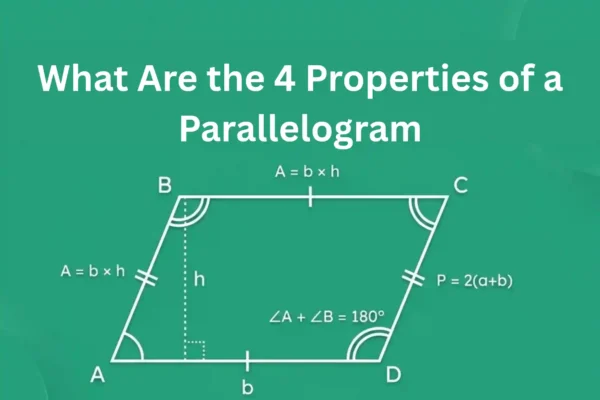
Introduction Understanding geometry becomes easier when you recognize patterns between shapes. One important quadrilateral is the parallelogram. It appears in...