


Property & Rental Law
What are the physical properties of glass: Easy Methods Explained
Introduction When you look through a clean window, hold a drinking cup, or touch a smartphone screen, you interact with...
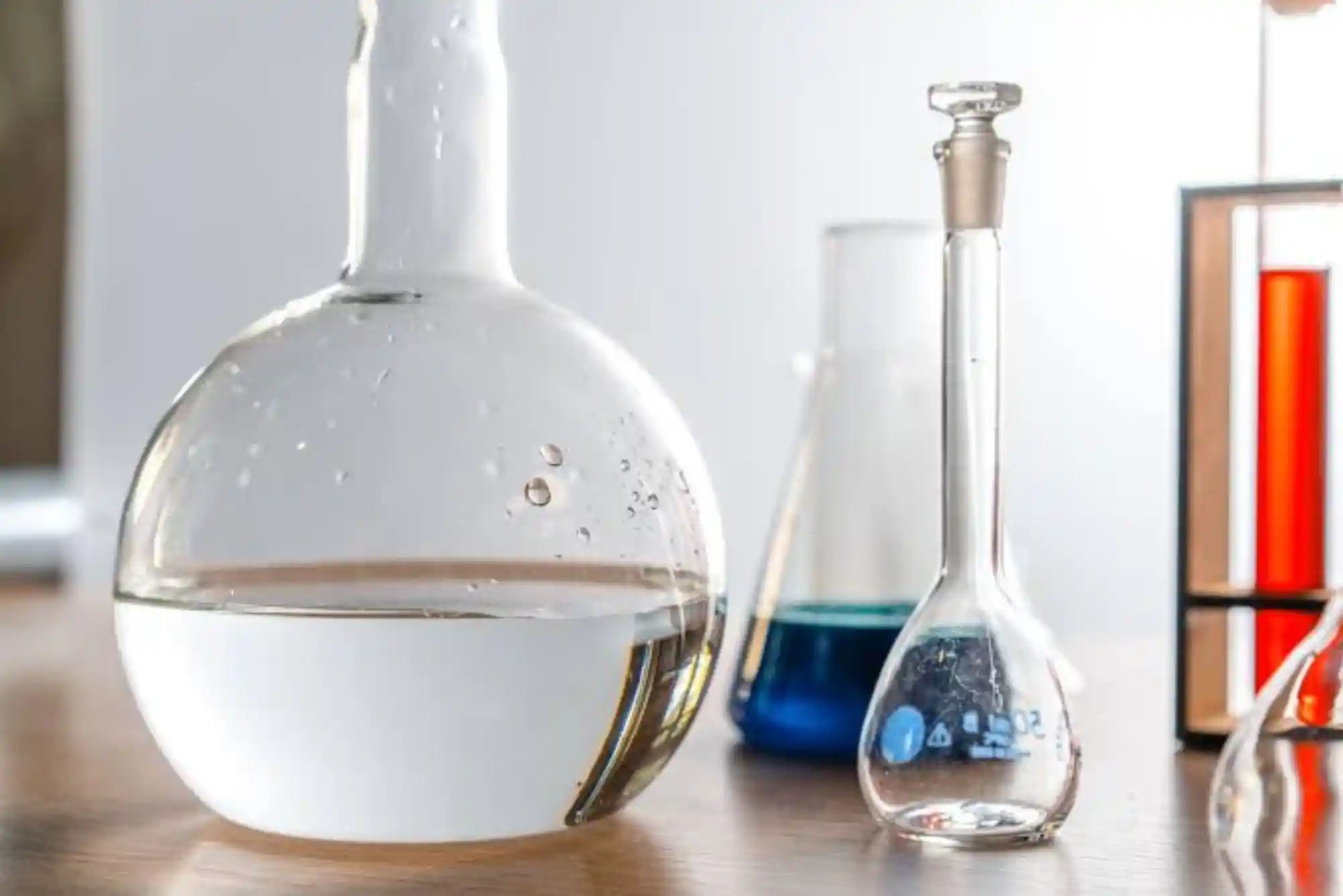
Water is the most fundamental substance on Earth, covering over seventy percent of the planet's surface. Every living cell relies on water to carry out metabolic processes, move nutrients, and eliminate waste products. Understanding what are the chemical properties of water allows us to appreciate how life functions at a molecular level. This comprehensive beginner to advanced guide explores the molecular structure, polarity, reactivity, and advanced chemical behaviors of water.
A single molecule of water consists of two hydrogen atoms covalently bonded to one oxygen atom. The oxygen atom shares electrons with each hydrogen atom to fill its outer electron shell. Rather than forming a straight line, the water molecule takes on a bent molecular geometry. This shape creates a bond angle of approximately 104.5 degrees between the hydrogen atoms. The two unshared pairs of electrons on oxygen force the hydrogen atoms closer together.
Oxygen has a significantly higher electronegativity value compared to hydrogen. This means oxygen exerts a stronger pull on the shared bonding electrons. As a result, the oxygen atom develops a partial negative charge. The hydrogen atoms end up with a partial positive charge. This asymmetrical charge distribution makes water a highly polar molecule with a net dipole moment.
Because opposite charges attract, the negative oxygen atom of one water molecule attracts the positive hydrogen atom of a neighboring molecule. This attractive force is known as a hydrogen bond. Each water molecule can form up to four hydrogen bonds with surrounding molecules. These intermolecular bonds continuously form and break in liquid water. This strong dynamic network is responsible for water's exceptional stability and unique liquid properties.
Water is frequently referred to as the universal solvent because it dissolves a vast array of substances. When ionic compounds such as table salt enter water, the polar water molecules surround the individual ions. The partial negative oxygen atoms orient toward positive sodium cations. The partial positive hydrogen atoms face negative chloride anions. This interaction is known as hydration, and it isolates and stabilizes the ions in solution.
Water possesses an exceptionally high dielectric constant. A high dielectric constant means that water can reduce the electrostatic force of attraction between oppositely charged ions. When ionic crystals dissolve, water weakens the ionic bonds keeping the lattice together. This property makes water an essential medium for biological transport and industrial chemical processes.
Substances that dissolve readily in water are called hydrophilic, or water-loving. Polar molecules and salts form strong interactions with water molecules. Conversely, nonpolar compounds like oils and fats are hydrophobic. Nonpolar molecules cannot form hydrogen bonds with water. As a result, water molecules squeeze the nonpolar substances together to minimize disruption to their own hydrogen-bonded network.
One of the most notable chemical properties of water is its amphoteric nature. Under the Brønsted-Lowry acid-base theory, an amphoteric substance can act as either an acid or a base. When water reacts with a strong acid like hydrochloric acid, it accepts a proton and acts as a base. When water reacts with a base like ammonia, it donates a proton and acts as an acid.
Even in its purest form, water undergoes a continuous process called self-ionization or autoionization. During this reaction, two water molecules collide and exchange a proton. One water molecule donates a hydrogen ion to the other. This produces a hydronium cation and a hydroxide anion. The reversible equation is represented as two H2O molecules yielding H3O+ and OH- ions.
At standard room temperature, the self-ionization of water reaches a precise equilibrium state. The concentration of hydronium ions equals the concentration of hydroxide ions. Both concentrations measure exactly 10^-7 moles per liter. Because these ion concentrations are equal, pure water maintains a perfectly neutral pH value of 7. This self-ionizing balance serves as the absolute baseline for measuring acidity and alkalinity across chemistry.
Water exhibits diverse chemical reactivity depending on the elements it contacts. Highly reactive alkali metals like sodium and potassium react violently with liquid water. This reaction produces metal hydroxide solutions and liberates flammable hydrogen gas. Less reactive metals like magnesium do not react rapidly with cold water but react readily with steam. Corrosion processes, such as the rusting of iron, also require the presence of both oxygen and water.
Water reacts with several nonmetals under specific thermodynamic conditions. For example, fluorine gas reacts aggressively with water to yield hydrogen fluoride and release oxygen gas. Chlorine gas dissolves in water to form an equilibrium mixture of hydrochloric acid and hypochlorous acid. Hypochlorous acid serves as a powerful bleaching and oxidizing agent used widely in water treatment plants.
Water undergoes combination reactions with metal and nonmetal oxides. When basic metal oxides like calcium oxide react with water, they form basic metal hydroxides like calcium hydroxide. Conversely, acidic nonmetal oxides like sulfur dioxide react with water to form acidic solutions like sulfurous acid. These chemical reactions play a crucial environmental role in acid rain formation.
Water actively participates in oxidation-reduction or redox reactions. In these reactions, water can act as either an oxidizing agent or a reducing agent. During the electrolysis of water, an electric current splits liquid water into elemental hydrogen and oxygen gases. Water is reduced at the cathode to form hydrogen gas. Water is oxidized at the anode to produce oxygen gas.
In natural ecosystems, water drives essential biological oxidation-reduction cycles. Plants utilize water during photosynthesis as an electron donor. Light energy splits water molecules, releasing oxygen into the atmosphere while producing biochemical energy. Without this fundamental redox reaction, oxygen-dependent life on Earth could not exist.
Hydrolysis is a vital chemical reaction where water breaks down complex chemical bonds. During hydrolysis, a water molecule splits into a hydrogen ion and a hydroxyl group. These fragments attach to the split ends of a larger polymer molecule. Biological digestion relies heavily on enzymatic hydrolysis to break down proteins, carbohydrates, and lipids into simple nutrients.
Water can integrate directly into the crystalline lattices of ionic salts to form chemical compounds called hydrates. The water molecules trapped inside the crystal structure are referred to as water of crystallization. Copper sulfate pentahydrate is a classic example, containing five water molecules for every formula unit of copper sulfate. Heating a hydrate drives off the water, leaving behind an anhydrous salt.
At an advanced chemical level, water acts as an electron-pair donor or Lewis base. The lone electron pairs on the oxygen atom allow water to bind to transition metal ions. This forms aqua complex ions, such as hexaaquairon(III) or hexaaquacopper(II). These metal-water coordination complexes give many mineral solutions their vibrant colors and distinct chemical behaviors.
Understanding what are the chemical properties of water is also critical in environmental law and real estate development. When managing industrial discharge or property development near water sources, seeking advice from a Lawyer in Dubai ensures compliance with strict environmental regulations. Proper legal guidance helps prevent chemical contamination of local aquifers. Furthermore, navigating land usage requires a detailed understanding of local Property & Rental Law to protect water infrastructure and maintain property compliance.
The primary chemical properties of water include its polarity, amphoteric nature, universal solvency, self-ionization, and high dielectric constant. It also participates readily in redox, hydrolysis, and hydrate formation reactions.
Water is considered amphoteric because it can act as both an acid and a base. It donates a proton when reacting with strong bases and accepts a proton when reacting with strong acids.
Water is called a universal solvent because its strong dipole moment and high dielectric constant allow it to dissolve more polar and ionic substances than almost any other liquid.
The chemical formula of water is H2O. It has a bent molecular shape with a bond angle of about 104.5 degrees due to two covalent bonds and two unshared lone pairs of electrons on oxygen.
Understanding what are the chemical properties of water provides deep insight into fundamental chemistry, biological systems, and industrial applications. From its bent molecular geometry and strong polarity to its amphoteric behavior and universal solvency, water remains the most unique liquid in science. These chemical traits allow water to sustain ecosystems, drive chemical manufacturing, and regulate Earth's climate. To explore more scientific breakdowns or learn about environmental regulations surrounding water safety, browse our comprehensive learning hub today.
The articles published on TopLawyer.ae are prepared for general educational and informational purposes only and do not constitute formal legal advice or the formation of an attorney-client relationship. UAE laws, judicial precedents, and regulatory procedures are subject to frequent legislative amendments. Readers should consult a licensed legal advocate or registered law firm regarding their specific circumstances prior to taking legal action.

Licensed advocates and legal consultants experienced in this practice area across the UAE.

Introduction When you look through a clean window, hold a drinking cup, or touch a smartphone screen, you interact with...

Introduction Is there property tax in Texas? Yes, Texas has a property tax system that helps fund essential public services....

Introduction Buying property abroad can be an exciting investment, especially when comparing Spain and Portugal. Both countries offer beautiful coastlines,...
