Introduction
Buying property in Dubai has become an attractive option for expatriates who want a long-term home, rental income, or exposure to one of the world’s most internationally connected real estate markets. But before committing to a property, an expat needs to understand where foreign ownership is permitted, how the purchase process works, what costs are involved, and how to calculate whether a property makes financial sense.
So, where can expats buy property in Dubai? Foreign nationals can purchase property in designated freehold areas, while the exact ownership rights depend on the location and property type. The UAE Government confirms that foreign ownership in Dubai is permitted in designated areas, making location one of the first things an overseas buyer should verify.
This guide explains where expats can buy property in Dubai, the main purchasing methods, useful financial formulas, and practical examples to help buyers make informed decisions.
Where Can Expats Buy Property in Dubai?
Expats can buy property in Dubai in designated freehold areas. Freehold ownership generally provides stronger ownership rights than a time-limited lease arrangement and allows eligible foreign buyers to hold property in their own name.
Dubai Land Department states that foreign ownership is available in freehold areas under Dubai’s real estate registration framework.
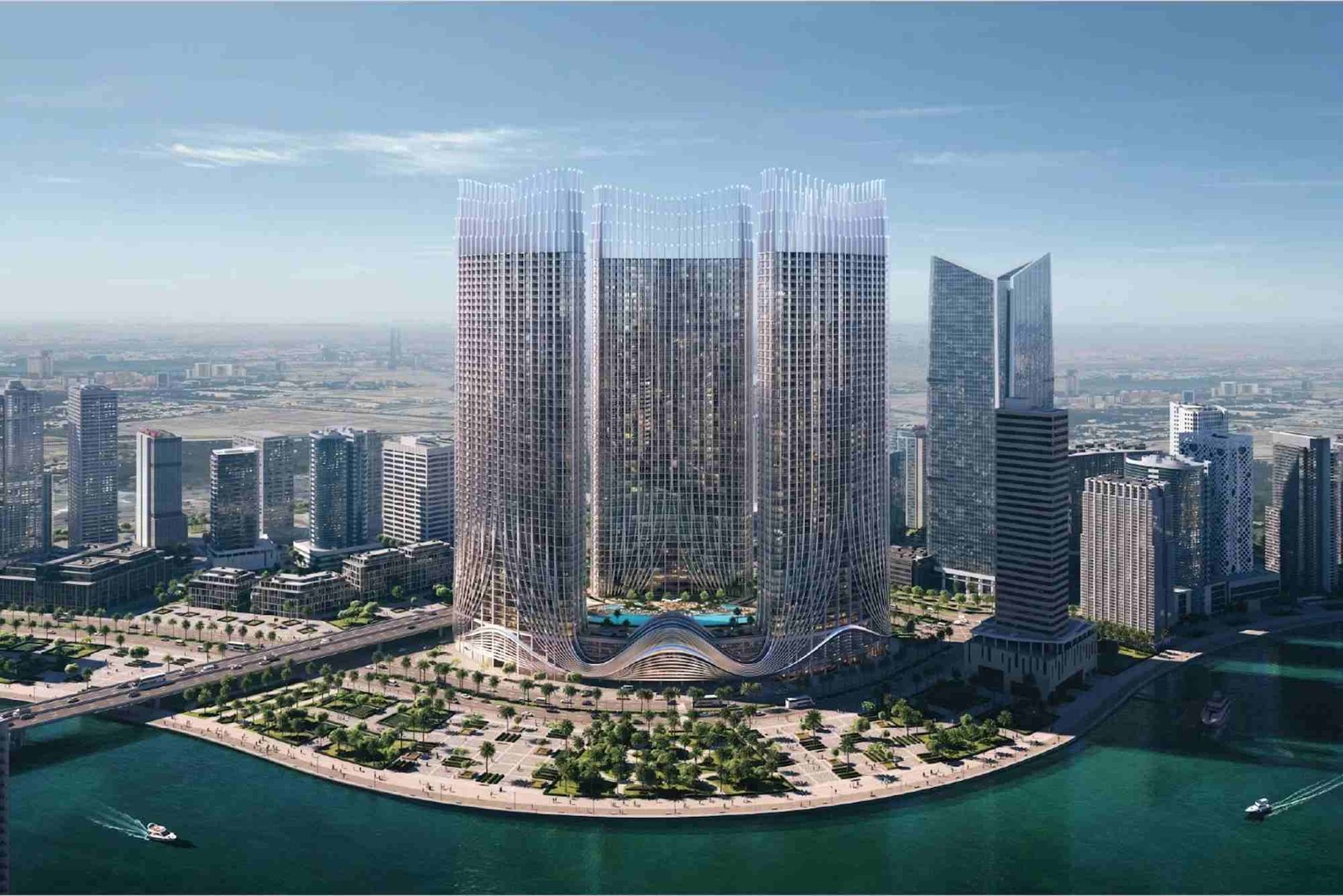
Popular areas open to foreign ownership include communities such as Downtown Dubai, Dubai Marina, Palm Jumeirah, Business Bay, Dubai Hills Estate, Jumeirah Village Circle, Dubai Creek Harbour and several other designated developments. However, the permitted ownership structure should always be checked for the specific plot, building or development rather than assumed solely from the district name.

Downtown Dubai
Downtown Dubai is one of the city’s most established locations and is particularly attractive to expats who want to live close to major commercial, entertainment and transport destinations. Apartments are common, while premium properties can command substantially higher prices.
For an investor, the appeal is largely connected to location, tenant demand and the area’s established reputation. For an owner-occupier, proximity to workplaces and amenities can be equally important.
Dubai Marina
Dubai Marina is another established freehold destination popular with international residents. Its apartment-focused market appeals to buyers looking for waterfront living and potential rental demand.
The key consideration is not simply whether an apartment is in Dubai Marina. Buyers should compare the building’s age, service charges, facilities, maintenance history, views, parking and actual rental performance.
Palm Jumeirah
Palm Jumeirah is associated with luxury apartments, villas and branded residences. Property prices can be significantly higher than in many other Dubai communities, making the area more relevant to buyers with substantial capital.
For an expat considering Palm Jumeirah, the purchase decision should focus on the relationship between acquisition price, expected rental income, service costs and long-term resale potential.
Business Bay
Business Bay provides a more central alternative for buyers interested in apartments close to Downtown Dubai and major business districts. It includes a wide variety of buildings and price points.
Because buildings differ considerably, comparing individual developments is particularly important. Two properties in the same general location can have very different service charges, rental yields and resale prospects.
Dubai Hills Estate and Family Communities
Expats looking for family-oriented living may consider areas such as Dubai Hills Estate and other established residential communities. These locations can provide a different balance between accessibility, schools, green spaces, community facilities and property size.
The right choice ultimately depends on whether the buyer prioritises lifestyle, rental income, capital appreciation, commuting convenience or a combination of these factors.
What Methods Can Expats Use to Buy Property in Dubai?
There is no single method that works for every expat. A buyer can purchase a ready property, purchase off-plan, use personal funds, or arrange financing where eligible.
Buying a Ready Property
A ready property is already constructed and can generally be inspected before purchase. This makes it easier for an expat to assess the actual condition of the apartment or villa, the building, surrounding area and existing rental market.
The buyer and seller agree on the transaction, complete the required documentation and proceed with registration through the appropriate Dubai Land Department process. For non-resident foreign buyers, a valid passport can be used for identity verification during property sale registration.
A ready property can be particularly suitable for an expat who wants to move into the property quickly or generate rental income soon after completion of the transaction.
Buying an Off-Plan Property
Off-plan property means purchasing a unit before construction is complete. Developers may offer structured payment plans, which can make the initial cash requirement different from purchasing a completed property.
However, an off-plan purchase requires careful due diligence. The buyer should investigate the developer, project registration, payment schedule, expected completion date, contractual terms and exit options.
The lower initial payment does not automatically mean that an off-plan property is cheaper. The buyer should calculate the complete amount payable and compare it with comparable completed properties.
Buying With Cash
Cash purchasing is relatively straightforward because the buyer does not need mortgage approval. It can also make negotiations more flexible in some circumstances.
However, using cash does not mean there are no additional expenses. Registration costs, service charges, agency fees where applicable, conveyancing or legal expenses, valuation requirements and other transaction-related charges should be included in the overall budget.
Buying With a Mortgage
Eligible expats can also consider mortgage financing. The precise financing terms depend on the lender, applicant profile, income, residency status, property and other factors.
Instead of looking only at the advertised property price, an expat should calculate the required deposit plus transaction costs and compare the expected mortgage payment with household income and other financial commitments.
What Is the Formula for Calculating the Real Cost?
One of the most useful methods for expats is to calculate the total acquisition cost rather than looking only at the property’s advertised price.
A simple formula is:
Total Purchase Cost = Property Price + DLD/Registration Costs + Agency Fees + Mortgage Costs + Legal/Administrative Costs + Other Applicable Charges
Dubai Land Department’s current property sale registration information states that the buyer’s registration fee is 2% of the sale value and the seller’s fee is also 2%. Additional title deed, map and other charges can apply.
For example, assume an expat buys a ready apartment for AED 1,500,000.
If the buyer’s DLD registration component is calculated at 2%, that would be:
AED 1,500,000 × 2% = AED 30,000
The buyer may also have other transaction costs, such as agency fees and administrative charges. Therefore, the real cash requirement should be higher than AED 1.5 million.
This is why experienced buyers focus on the all-in acquisition cost rather than the advertised purchase price.
How Can Expats Calculate Rental Yield?
Rental yield is another useful formula for an expat purchasing an investment property.
The basic gross rental yield formula is:
Gross Rental Yield = Annual Rental Income ÷ Property Purchase Price × 100
Suppose an expat purchases an apartment for AED 1,200,000 and expects annual rent of AED 72,000.
The calculation would be:
AED 72,000 ÷ AED 1,200,000 × 100 = 6%
The gross rental yield is therefore 6%.
However, gross yield should not be confused with actual investment return. Service charges, maintenance, vacancy periods, management fees, insurance and other expenses can reduce the net return.
A more useful calculation is:
Net Rental Yield = (Annual Rent − Annual Property Expenses) ÷ Total Investment Cost × 100
This gives the buyer a more realistic picture of the property’s performance.
Example: Comparing Two Dubai Properties
Imagine an expat has AED 1.5 million available and is considering two apartments.
Property A costs AED 1.3 million and generates AED 65,000 in annual rent. Property B costs AED 1.5 million and generates AED 78,000 in annual rent.
Property A’s gross yield is approximately:
AED 65,000 ÷ AED 1,300,000 × 100 = 5%
Property B’s gross yield is approximately:
AED 78,000 ÷ AED 1,500,000 × 100 = 5.2%
At first glance, Property B appears slightly better from a gross-yield perspective. But the decision should not stop there.
If Property B has substantially higher service charges or maintenance costs, its net yield could be lower. Similarly, Property A might have stronger resale demand or a better location for the buyer’s personal circumstances.
This demonstrates why formulas are useful tools rather than automatic decision-makers.
What Legal Checks Should Expats Make?
Buying property involves more than finding an attractive apartment. The buyer should verify ownership rights, title information, developer documentation, outstanding liabilities, service charges and the contractual terms before completing the transaction.
Working with an appropriately qualified property professional can help, but independent legal review may also be worthwhile for complicated transactions, particularly where the buyer is an overseas investor, multiple parties are involved, or the purchase involves financing.
For legal guidance relating to property matters, expats can consult a qualified Lawyer in Dubai.
Buyers can also review resources concerning Property & Rental Law to better understand the legal issues that can arise around property ownership, leasing and related transactions.
Check the Title and Ownership Structure
The buyer should confirm that the seller has the legal right to sell the property and that the property details correspond with the official records.
For a ready property, the transaction process involves documentation verification and registration through a Real Estate Registration Trustee centre, with the Dubai Land Department issuing an electronic title deed after completion.
Understand Service Charges
Service charges can materially affect the financial performance of an apartment, particularly when the property is being purchased as an investment.
A property with an attractive rental yield may become less attractive once recurring building and community expenses are deducted. Buyers should therefore request the relevant service-charge information before committing.
Review the Sales Agreement
The Sales and Purchase Agreement should be read carefully before signing. Important provisions can cover payment obligations, completion, default, handover, cancellation and other responsibilities.
If the buyer does not fully understand a contractual provision, professional legal advice can help clarify the implications before the agreement becomes binding.
Can Buying Property Give Expats UAE Residency?
Property ownership and residency are related but should not be treated as the same thing. Buying a property does not automatically mean that every purchaser receives residency.
Dubai Land Department states that property-based residency options are available subject to applicable requirements. Its current FAQ information refers to different real-estate residency categories, including a five-year route for qualifying property valued at more than AED 2 million, subject to conditions.
Therefore, an expat considering property partly for residency purposes should verify the current eligibility requirements rather than relying on the property’s price alone.
Common Mistakes Expats Should Avoid
One common mistake is choosing a property solely because its asking price appears low. A cheaper property may have weaker rental demand, higher service charges or limited resale liquidity.
Another mistake is concentrating entirely on expected capital appreciation. Property values can rise or fall, and future performance is never guaranteed. A sensible analysis considers rental income, holding costs, financing expenses and the buyer’s intended holding period.
Some buyers also underestimate transaction expenses. The purchase price is only one component of the total financial commitment.
Finally, expats should avoid rushing into a purchase simply because a property is described as a limited-time opportunity. A properly researched property should still make sense after the buyer checks the numbers, documents and legal terms.
Conclusion: Where Can Expats Buy Property in Dubai?
So, where can expats buy property in Dubai? The answer begins with designated freehold areas, where foreign ownership is permitted under Dubai’s property regulations. From established locations such as Downtown Dubai and Dubai Marina to family-focused communities and newer developments, the market provides options for different budgets and objectives.
The most important step is not simply finding a property. Expats should determine their purpose, calculate the total acquisition cost, compare potential rental income with ongoing expenses, investigate the property and seller, and understand the legal documents before completing the transaction.
Whether the objective is a primary residence, second home or investment, using a clear formula and carrying out proper due diligence can make the purchasing process much more predictable.
Before signing a property agreement, consider obtaining independent legal advice and reviewing the applicable ownership and transaction requirements. A careful approach today can help protect both your investment and your long-term plans in Dubai.
Finding reliable legal guidance can make it easier to understand your rights, responsibilities, and available options. TopLawyer offers useful information to help readers explore legal topics and connect with professional resources. Visit TopLawyer.ae to discover helpful legal insights and make more informed decisions about important legal matters.
FAQs
Can foreigners buy property in Dubai?
Yes. Foreign nationals can purchase property in designated freehold areas of Dubai. Dubai Land Department confirms that foreign ownership is permitted in freehold areas under the applicable real estate registration framework.
Can an expat buy property in Dubai without residency?
Yes, foreign buyers do not necessarily need to be UAE residents to purchase eligible property. Non-resident foreign buyers can use a valid passport for identity verification in the Dubai property registration process.
What is the best area in Dubai for expats to buy property?
There is no single best area for every expat. Downtown Dubai and Dubai Marina may appeal to buyers prioritising established central or waterfront locations, while communities such as Dubai Hills Estate and other residential developments may suit buyers seeking a different lifestyle or family environment. The right choice depends on budget, purpose, rental demand and long-term plans.
How much does an expat need to buy property in Dubai?
The required amount depends on the property’s price, whether the purchase is cash or financed, and applicable transaction costs. Buyers should calculate the deposit or cash contribution plus registration, agency, financing and other applicable expenses rather than budgeting only for the advertised price.
Is buying property in Dubai a good investment for expats?
It can be, but returns are not guaranteed. An expat should compare purchase price, expected rent, service charges, maintenance, financing costs, vacancy risk and potential resale demand before deciding.
Can property owners get residency in Dubai?
Qualifying property owners may be eligible for property-based residency subject to the applicable requirements. Dubai Land Department currently identifies several real-estate residency options, including a five-year option for qualifying property valued above AED 2 million and meeting the relevant conditions.
What should I check before buying property in Dubai?
Buyers should verify the ownership status, property documents, seller’s authority, applicable fees, service charges, contractual terms and registration requirements. For complex transactions, professional legal advice can provide additional protection.
Related Reading: Who can buy property in dubai: Step-by-Step Guide
Related Reading: What are the Properties of Waves: Methods, Formula & Examples
Related Reading: Can expats buy property in uae: Step-by-Step Guide — full guide
Related Reading: What does chemical property mean: Methods, Formula & Examples
Related Reading: Is dubai property a good investment: Methods, Formula & Examples
Related Reading: How to Invest in Property in Dubai
Related Reading: Who is Buying Property in Dubai
Related Reading: How much profit should you make on a rental property: Methods, Formula & Examples — full guide