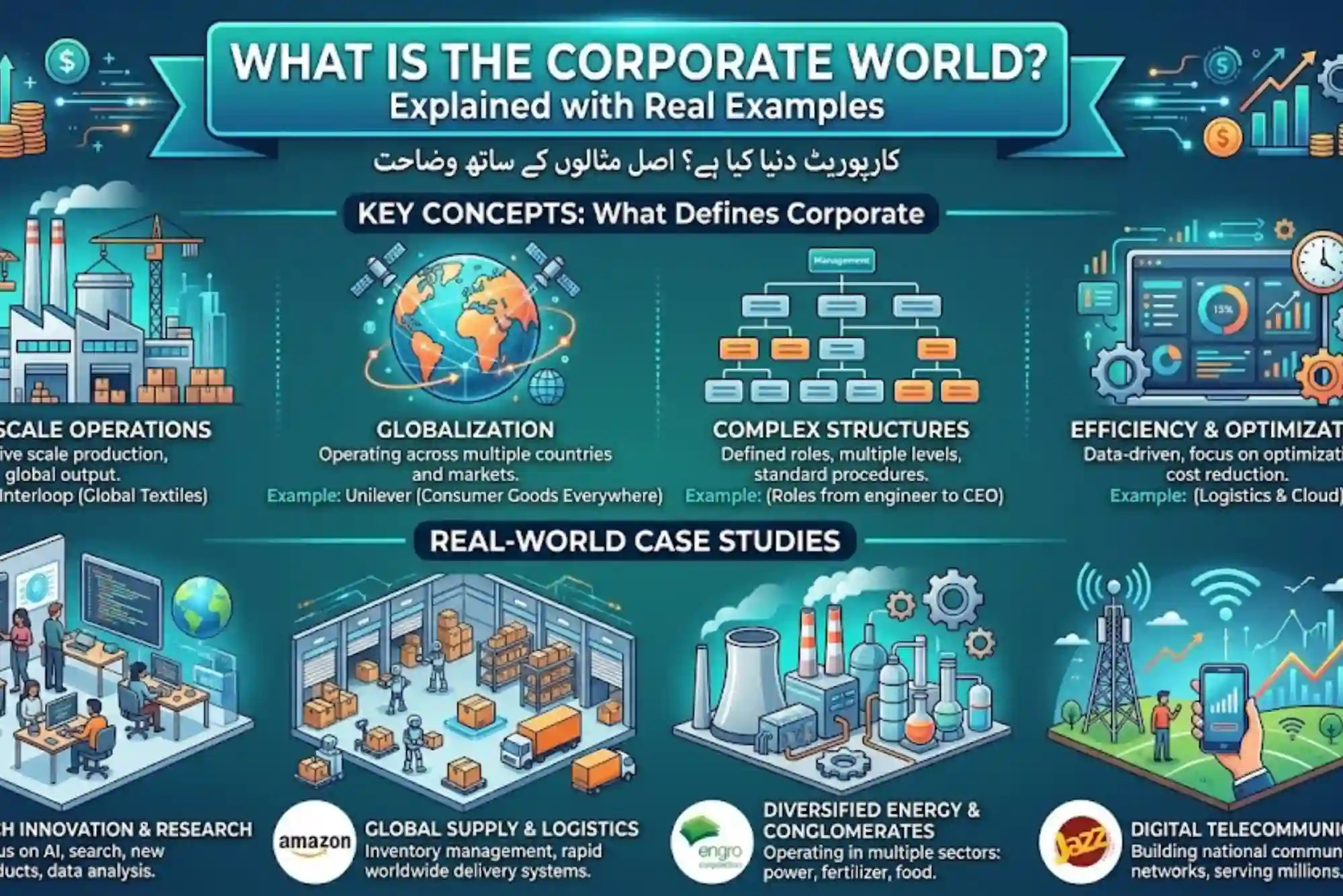
The corporate world is one of the most influential forces shaping modern economies, careers, and global business ecosystems. Yet for many beginners, the term often feels abstract or overly complex. This article breaks down the corporate world in simple, practical terms—explaining how it works, who operates within it, and why it matters in everyday life.
Introduction to the Corporate World
The corporate world refers to the structured environment of large and medium-sized organizations that operate as formal businesses. These organizations include private companies, multinational corporations, financial institutions, consulting firms, and publicly traded companies.
Unlike small businesses or informal trade, the corporate world is defined by hierarchy, policies, standardized processes, and professional roles. It is a system where decisions are driven by strategy, profitability, governance, and long-term organizational goals.
Understanding the corporate world meaning is essential for students, job seekers, entrepreneurs, and professionals because it influences global employment trends, innovation, and economic development.
What Is the Corporate World?
The corporate world is a professional ecosystem where businesses operate under structured management systems. It includes everything from internal company operations to global business interactions between corporations.
In simple terms, it is the environment where professionals work in offices, departments, and teams to achieve business objectives such as growth, profitability, innovation, and customer satisfaction.

The corporate world definition extends beyond office jobs—it includes legal frameworks, financial systems, global trade, leadership structures, and organizational behavior.
Structure of the Corporate World
Hierarchical Organization Systems
One of the defining features of the corporate world is hierarchy. Organizations are structured in layers, ensuring clear roles, responsibilities, and reporting systems.
At the top level, executives such as CEOs and directors make strategic decisions. Middle management translates these strategies into actionable plans, while operational staff executes daily tasks.
Departments and Functional Divisions
Corporate organizations are divided into departments such as Human Resources, Finance, Marketing, Operations, IT, and Legal. Each department plays a specialized role in ensuring smooth business operations.
Corporate Governance and Compliance
Governance refers to the rules, policies, and legal frameworks that guide corporate behavior. This ensures transparency, accountability, and ethical decision-making within organizations.
Key Components of the Corporate World
The corporate world is built on several interconnected components that ensure stability and growth.
Organizations and Companies
Companies are the core units of the corporate world. They range from startups to multinational enterprises operating across multiple countries and industries.
Employees and Professionals
Employees form the backbone of the corporate system. From entry-level staff to senior executives, each individual contributes to the overall success of the organization.
Stakeholders
Stakeholders include shareholders, customers, investors, suppliers, and regulatory bodies. Their interests influence corporate decisions and long-term strategies.
Legal and Financial Systems
The corporate world operates within legal frameworks and financial systems that regulate taxation, compliance, and reporting standards.
Real Examples of the Corporate World
To understand the corporate world better, it helps to look at real-world examples of global and regional corporations.
Multinational Corporations
Companies like Apple, Microsoft, and Amazon represent the global corporate world. They operate in multiple countries, employ thousands of professionals, and influence global markets.
Financial Institutions
Banks and financial organizations such as JPMorgan Chase or HSBC are key players in the corporate sector, managing investments, loans, and financial services for individuals and businesses.
Consulting and Service Firms
Firms like Deloitte, PwC, and Accenture provide advisory services to other corporations, helping them improve efficiency and strategy.
Regional Corporate Ecosystems
In regions like the Middle East and South Asia, corporate environments include industries such as construction, real estate, oil and gas, and technology startups that drive economic growth.
Corporate Jobs and Career Paths
The corporate world offers a wide range of career opportunities across different skill levels and industries.
Entry-Level Roles
Fresh graduates often start as analysts, assistants, or junior executives. These roles focus on learning processes and building foundational skills.
Mid-Level Management
Professionals with experience move into managerial roles where they oversee teams, manage projects, and make operational decisions.
Senior Leadership
Senior roles such as directors, vice presidents, and CEOs involve strategic planning, leadership, and organizational growth.
Corporate careers are often structured, offering stability, growth opportunities, and exposure to global business practices.
Corporate Culture and Work Environment
Corporate culture refers to the shared values, behaviors, and practices within an organization. It plays a crucial role in employee satisfaction and productivity.
Modern corporate environments emphasize teamwork, innovation, diversity, and performance-driven results. Many organizations also focus on work-life balance and employee well-being.
Communication, professionalism, and adaptability are key traits expected in corporate settings.
Importance of the Corporate World in the Global Economy
The corporate world is a major driver of economic development worldwide. It creates employment, supports innovation, and contributes significantly to national GDPs.
Large corporations invest in infrastructure, technology, and research, which leads to long-term economic progress. They also play a vital role in international trade and globalization.
Challenges in the Corporate World
Despite its benefits, the corporate world comes with challenges such as high competition, workplace stress, and economic uncertainty.
Employees often face pressure to meet targets, adapt to fast-changing technologies, and maintain productivity in demanding environments.
Ethical concerns, corporate governance issues, and global market fluctuations also present ongoing challenges for organizations.
The Future of the Corporate World
The corporate world is rapidly evolving due to digital transformation, artificial intelligence, and automation.
Remote work, hybrid office models, and digital collaboration tools are reshaping how companies operate globally.
In the future, corporate success will depend heavily on adaptability, innovation, sustainability, and data-driven decision-making.
Conclusion
The corporate world is a complex yet structured ecosystem that influences nearly every aspect of modern life. From job opportunities to global economic growth, it plays a central role in shaping society.
Understanding how it works helps individuals make better career choices, develop professional skills, and navigate today’s competitive business environment with confidence.