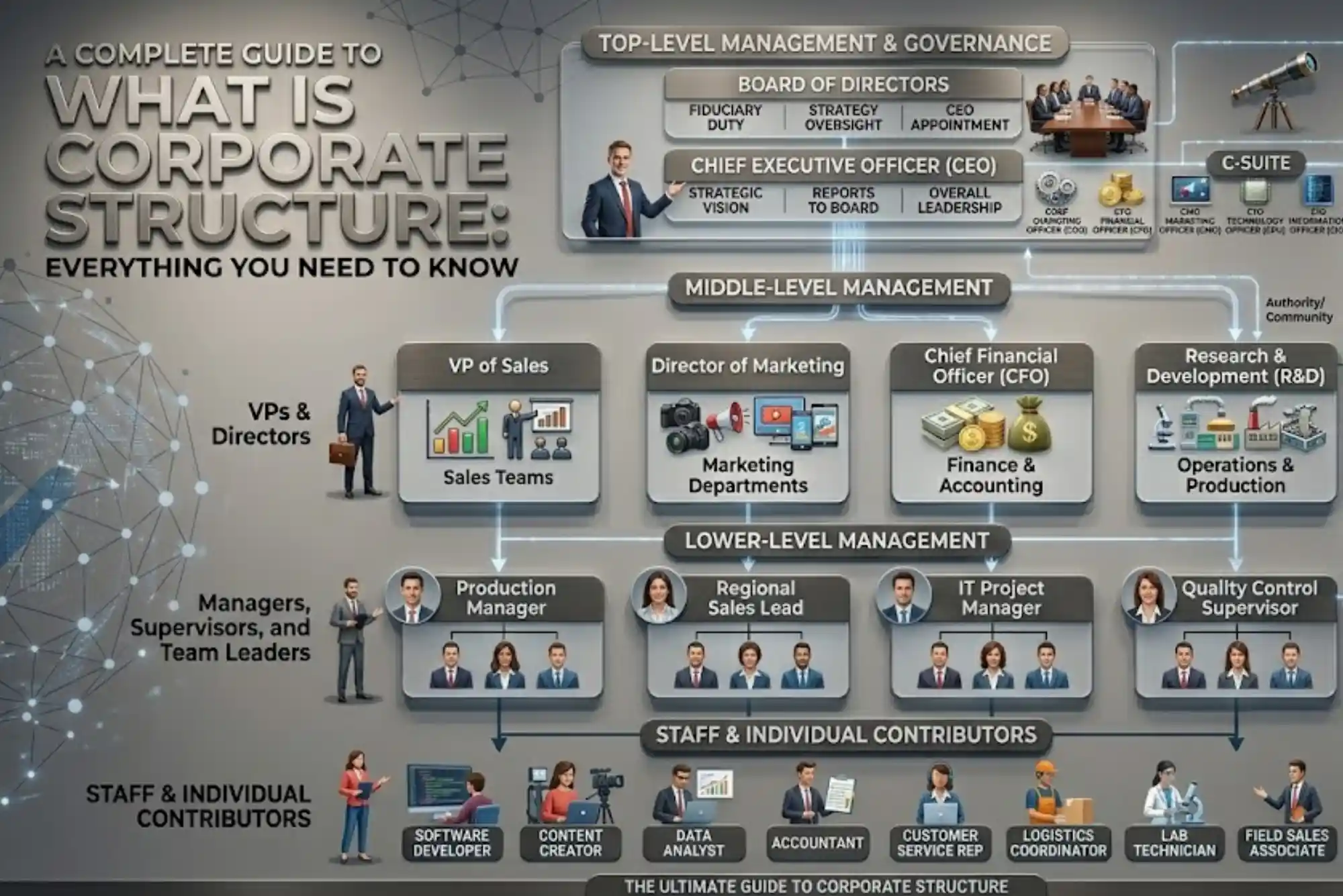
Understanding how a business is organized is essential for long-term success, compliance, and operational efficiency. One of the most fundamental concepts in business management and legal planning is corporate structure. Whether you are launching a startup or scaling an established company, choosing the right structure can directly influence your growth, taxation, and legal responsibilities.
In the UAE’s dynamic business environment, where regulations and opportunities continue to evolve, having clarity on corporate structure is not just beneficial—it is essential. This guide explores everything you need to know about corporate structure, including its types, importance, and how to select the most suitable model for your business.
What Is Corporate Structure?
Corporate structure refers to the way a company is organized legally and operationally. It defines how roles, responsibilities, authority, and decision-making processes are distributed within an organization. It also determines how a company interacts with regulators, stakeholders, and the broader market.
At its core, corporate structure outlines who owns the business, who manages it, and how profits and liabilities are handled. It serves as the backbone of any organization, shaping both internal workflows and external obligations.
Why Corporate Structure Matters
Choosing the right corporate structure is not a purely administrative decision. It has significant legal, financial, and strategic implications. A well-defined structure ensures compliance with local laws, reduces risk, and enhances operational clarity.
For businesses operating in the UAE, regulatory compliance is particularly important. Engaging experienced professionals, such as corporate lawyers in Abu Dhabi, can help ensure that your business structure aligns with current legal requirements and industry standards.

Additionally, corporate structure influences taxation, investment opportunities, and the ability to expand internationally. Investors often evaluate a company’s structure before committing funds, making it a critical factor in business credibility.
Types of Corporate Structures
Sole Proprietorship
A sole proprietorship is the simplest form of business structure, where a single individual owns and operates the company. While it offers full control and minimal regulatory requirements, it also exposes the owner to unlimited personal liability.
Partnership
In a partnership, two or more individuals share ownership and responsibilities. This structure allows for shared decision-making and resource pooling, but it also requires clear agreements to avoid disputes and manage liabilities effectively.
Limited Liability Company (LLC)
The LLC is one of the most popular corporate structures in the UAE. It provides a balance between flexibility and protection by limiting the personal liability of owners while allowing operational freedom. Many businesses prefer this model due to its adaptability and legal safeguards.
Corporation
A corporation is a more complex structure that exists as a separate legal entity from its owners. It offers strong liability protection and is suitable for larger businesses seeking investment or planning to go public. However, it comes with stricter regulatory requirements and governance obligations.
Free Zone Company
In the UAE, free zone companies are a unique option that allows 100% foreign ownership, tax benefits, and simplified setup processes. These structures are ideal for businesses focusing on international trade and services.
Key Components of Corporate Structure
A corporate structure is not just about legal classification; it also involves internal organization. This includes the hierarchy of management, reporting lines, and departmental divisions.
Typically, a structured organization includes shareholders, a board of directors, executive management, and operational teams. Each level has defined responsibilities, ensuring accountability and efficient decision-making.
Clear communication channels and defined authority levels help prevent confusion and improve productivity. This is particularly important in growing businesses where complexity increases over time.
How to Choose the Right Corporate Structure
Selecting the appropriate corporate structure requires careful evaluation of several factors. Business goals, industry type, and long-term vision all play a role in this decision.
For example, a small consulting firm may benefit from a simple structure, while a multinational company may require a more sophisticated framework. Legal requirements in the UAE also influence this choice, making professional guidance essential.
Consulting experts through platforms like trusted legal advisors in the UAE can provide valuable insights into the most suitable structure for your business model.
Advantages of a Well-Defined Corporate Structure
A clearly defined corporate structure offers numerous benefits. It enhances operational efficiency by establishing clear roles and responsibilities. It also improves accountability, making it easier to track performance and manage teams effectively.
From a legal perspective, the right structure minimizes risks and ensures compliance with regulations. It also facilitates smoother interactions with investors, partners, and regulatory authorities.
Moreover, a strong structure supports scalability. As your business grows, having an established framework allows for easier expansion and adaptation to new markets.
Challenges and Common Mistakes
Despite its importance, many businesses overlook the significance of corporate structure during the early stages. One common mistake is choosing a structure based solely on short-term convenience rather than long-term strategy.
Another challenge is failing to adapt the structure as the business evolves. What works for a startup may not be suitable for a growing enterprise. Regular reviews and adjustments are necessary to maintain efficiency and compliance.
Legal complexities can also pose challenges, particularly in jurisdictions like the UAE where regulations may vary across free zones and mainland setups. Seeking professional advice can help avoid costly errors.
Corporate Structure in the UAE Context
The UAE offers a diverse range of corporate structures tailored to different business needs. From mainland companies to free zone entities, each option comes with its own set of benefits and limitations.
Understanding these options is crucial for entrepreneurs and investors looking to establish a presence in the region. The choice of structure can impact everything from ownership rights to tax obligations and operational flexibility.
Working with experienced legal professionals ensures that your business is set up correctly from the start, reducing risks and enhancing long-term success.
Conclusion
Corporate structure is a foundational element of any successful business. It defines how a company operates, complies with laws, and grows over time. Making the right choice requires a clear understanding of your goals, industry, and regulatory environment.
In the UAE’s competitive and fast-paced market, having a well-planned corporate structure can provide a significant advantage. It not only supports efficient operations but also builds credibility with stakeholders and investors.
By taking the time to evaluate your options and seek expert guidance, you can establish a strong foundation for your business and position it for sustainable growth.