Corporate management sits at the heart of every successful business. Whether you are running a startup or leading a multinational organization, the way a company is managed determines its growth, stability, and long-term sustainability. Yet, despite its importance, many people still ask a simple question: what is corporate management, and why does it matter so much?
This guide offers a clear and practical explanation of corporate management, supported by real-world examples and professional insights. It is designed for business owners, entrepreneurs, students, and professionals who want to understand how organizations operate at a strategic level.
Understanding Corporate Management
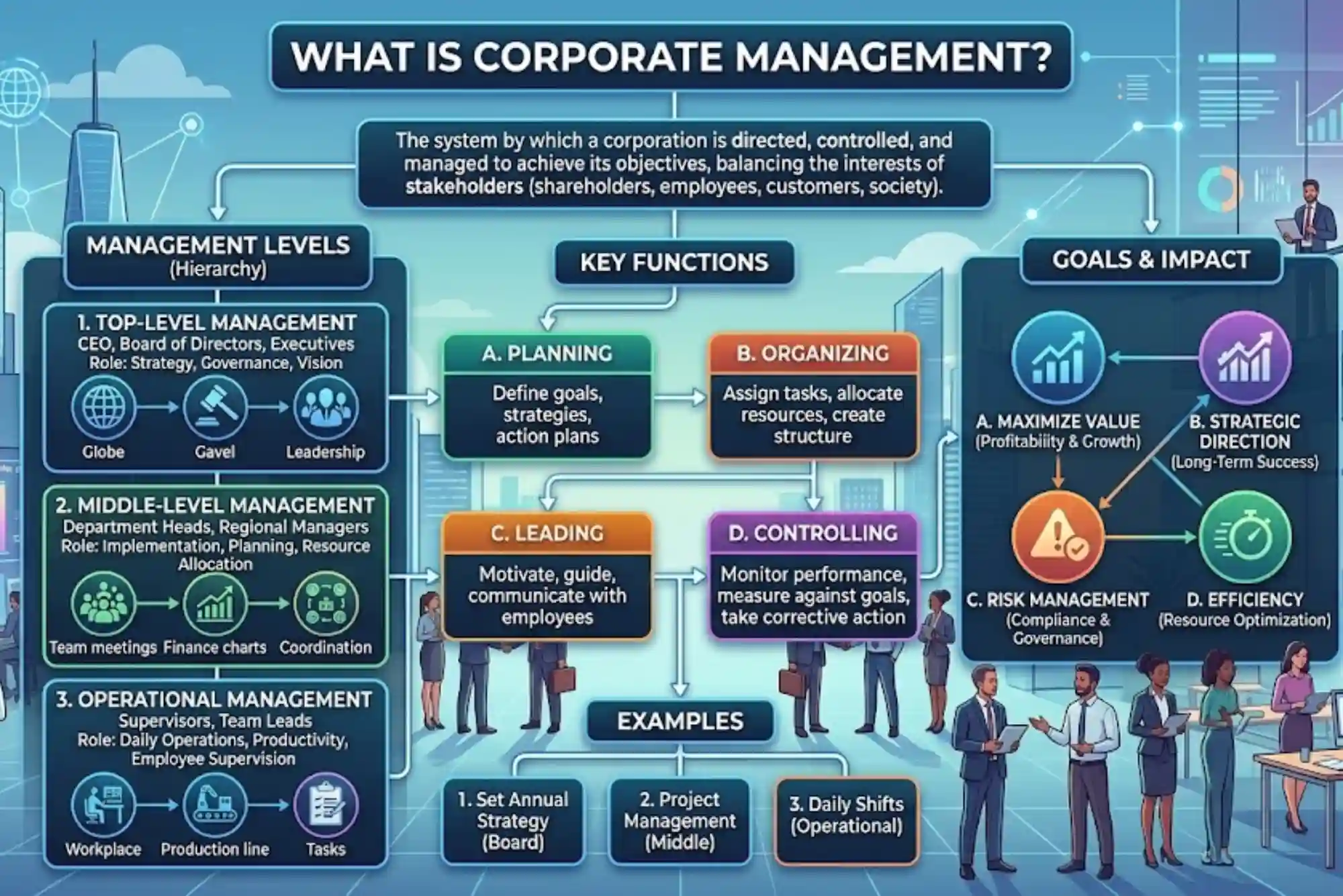
Corporate management refers to the system, structure, and processes used to direct and control a company. It involves planning, organizing, leading, and monitoring resources to achieve business objectives effectively.
At its core, corporate management ensures that a company operates efficiently while aligning its activities with long-term goals. This includes everything from strategic decision-making to day-to-day operations.
Unlike general business management, corporate management focuses more on high-level leadership, governance, and organizational direction. It often involves executives, board members, and senior managers working together to guide the company.
Key Functions of Corporate Management
Strategic Planning
Strategic planning is one of the most critical aspects of corporate management. It involves setting long-term goals and determining the best course of action to achieve them. This may include market expansion, product development, or entering new industries.

Organizational Leadership
Corporate leaders are responsible for guiding teams and ensuring that employees are aligned with the company’s vision. Effective leadership builds trust, improves productivity, and fosters innovation.
Resource Management
Managing resources efficiently is essential for business success. Corporate management ensures optimal use of financial, human, and technological resources.
Risk Management and Compliance
Companies operate in complex legal and regulatory environments. Corporate management plays a key role in ensuring compliance with laws and minimizing risks. For businesses operating in the UAE, seeking guidance from experienced legal professionals in Abu Dhabi can help ensure compliance with corporate regulations.
Corporate Management Structure
Corporate management typically follows a hierarchical structure. Each level has specific roles and responsibilities that contribute to the overall success of the organization.
Board of Directors
The board of directors is responsible for overseeing the company’s overall direction. They make high-level decisions and ensure accountability.
Executive Management
This includes positions such as CEO, CFO, and COO. These leaders are responsible for implementing strategies and managing operations.
Middle Management
Middle managers act as a bridge between executives and employees. They ensure that company policies are effectively implemented.
Operational Staff
These are employees responsible for executing daily tasks and contributing to the company’s objectives.
Corporate Management vs Corporate Governance
Corporate management and corporate governance are often used interchangeably, but they serve different purposes.
Corporate management focuses on running the business, while corporate governance ensures accountability, transparency, and ethical practices. Governance sets the rules, and management follows them.
A strong governance framework supports effective management, creating a balanced and responsible business environment.
Real-World Examples of Corporate Management
Example 1: Technology Company Expansion
A global technology company decides to expand into new markets. Corporate management develops a strategy, allocates resources, and ensures compliance with local regulations. This coordinated effort leads to successful international growth.
Example 2: Crisis Management in a Corporation
During an economic downturn, a company faces financial challenges. Corporate management responds by restructuring operations, reducing costs, and exploring new revenue streams. These decisions help the company recover and stabilize.
Example 3: Mergers and Acquisitions
When two companies merge, corporate management oversees the integration process. This includes aligning cultures, systems, and strategies to ensure a smooth transition.
Why Corporate Management Matters
Corporate management is essential for maintaining order and direction within an organization. Without it, businesses may struggle with inefficiencies, poor decision-making, and lack of accountability.
Effective management leads to better performance, stronger leadership, and improved stakeholder confidence. It also ensures that companies can adapt to changing market conditions.
The Role of Legal Expertise in Corporate Management
Legal considerations are deeply integrated into corporate management. From contracts to compliance, businesses must operate within legal frameworks.
Working with qualified legal experts ensures that companies avoid risks and make informed decisions. Businesses can explore trusted legal support through platforms like Top Lawyer UAE to strengthen their corporate strategies.
Challenges in Corporate Management
Despite its importance, corporate management comes with challenges. These include managing complex operations, adapting to market changes, and maintaining transparency.
Leaders must also balance short-term performance with long-term goals. This requires strategic thinking, flexibility, and strong decision-making skills.
Future Trends in Corporate Management
The future of corporate management is evolving rapidly. Technology, globalization, and changing workforce dynamics are reshaping how companies operate.
Digital transformation is becoming a key focus, with companies using data and automation to improve efficiency. Remote work and flexible structures are also influencing management practices.
Additionally, there is increasing emphasis on sustainability and ethical business practices. Companies are expected to consider environmental and social impacts in their decision-making processes.
Conclusion
Corporate management is more than just overseeing business operations. It is a strategic function that drives growth, ensures compliance, and shapes the future of organizations.
By understanding its principles and applying them effectively, businesses can achieve long-term success and resilience. Whether you are a business owner or an aspiring professional, mastering corporate management is a valuable step toward building a strong and sustainable career.