In today’s fast-moving business environment, managing company expenses efficiently is no longer optional—it is essential. As organizations grow, so do their financial responsibilities, making traditional expense tracking methods increasingly outdated. This is where corporate cards come into play.
Understanding what a corporate card is and how it works can significantly improve your company’s financial control, transparency, and operational efficiency. Whether you are a startup founder, finance manager, or corporate executive, this guide provides a clear, expert-level explanation tailored for modern businesses.
Understanding What a Corporate Card Is
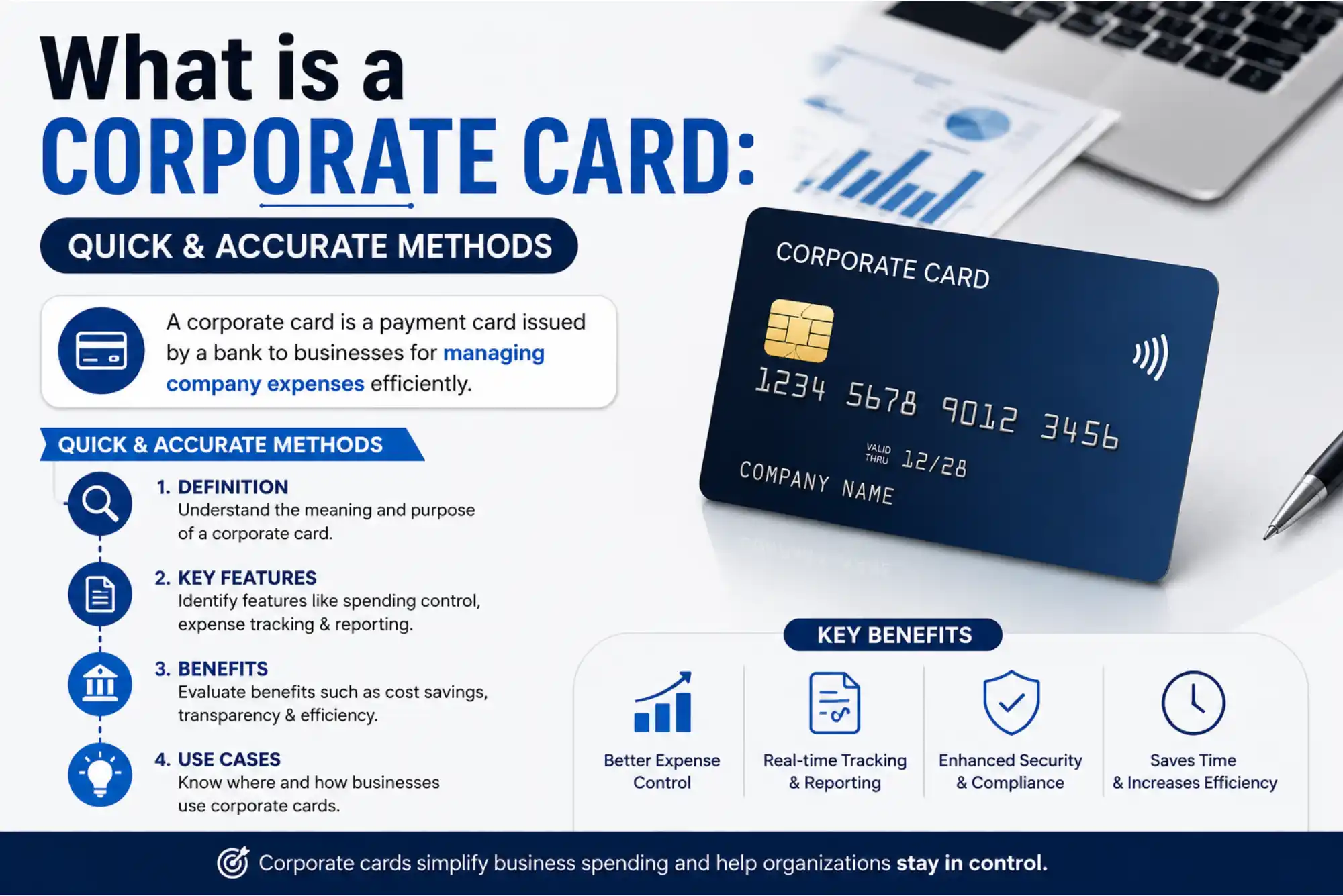
A corporate card is a payment card issued to employees of a company for business-related expenses. Unlike personal credit cards, corporate cards are directly linked to the company’s financial account, allowing organizations to monitor and control spending in real time.
These cards are typically used for travel expenses, office supplies, client meetings, and other operational costs. By centralizing expenses, companies can maintain accurate financial records while simplifying reimbursement processes.
Corporate cards are not just tools for convenience—they are part of a broader financial strategy that aligns with structured business practices such as corporate governance frameworks that ensure accountability and compliance.
How Corporate Cards Work in Practice
Corporate cards operate through a straightforward yet highly effective system. The company partners with a financial institution that issues cards to authorized employees. Each card is assigned specific limits and usage guidelines based on the employee’s role.

Transactions made using these cards are recorded automatically, providing finance teams with real-time visibility into company spending. This eliminates the need for manual expense reports and reduces the risk of errors or fraud.
Modern corporate cards also integrate with accounting software, enabling seamless reconciliation and reporting. This level of automation is particularly valuable for organizations aiming to streamline operations and reduce administrative overhead.
Types of Corporate Cards Businesses Should Know
Corporate Credit Cards
These cards allow companies to borrow funds up to a predefined limit. They are ideal for managing short-term expenses while maintaining cash flow flexibility.
Corporate Debit Cards
Linked directly to the company’s bank account, debit cards ensure that spending stays within available funds. They are often preferred for tighter budget control.
Prepaid Corporate Cards
Preloaded with a specific amount, prepaid cards are useful for controlling spending on specific projects or departments. They minimize financial risk while offering flexibility.
Choosing the right type depends on your company’s financial strategy and operational needs. Many businesses also align card usage with broader corporate activities, such as those discussed in corporate action planning.
Key Benefits of Using Corporate Cards
The adoption of corporate cards offers several tangible advantages for businesses of all sizes. One of the most significant benefits is improved expense management. With real-time tracking, companies gain complete visibility into how funds are being used.
Another major advantage is efficiency. Employees no longer need to use personal funds for business expenses or wait for reimbursements. This not only saves time but also enhances employee satisfaction.
Corporate cards also strengthen financial control by allowing companies to set spending limits and restrict certain types of transactions. This reduces the likelihood of misuse and ensures compliance with internal policies.
Additionally, detailed transaction records simplify auditing processes and support better decision-making. For organizations aiming to scale, this level of financial clarity is invaluable.
Quick & Accurate Methods to Manage Corporate Cards
Implement Clear Spending Policies
Establishing well-defined guidelines ensures that employees understand how and when to use corporate cards. Policies should cover spending limits, approved categories, and reporting requirements.
Leverage Technology for Automation
Modern expense management tools can automate transaction tracking, categorization, and reporting. This reduces manual work and enhances accuracy.
Monitor Transactions in Real Time
Real-time monitoring allows finance teams to identify unusual spending patterns quickly. This proactive approach helps prevent fraud and ensures compliance.
Conduct Regular Audits
Periodic reviews of corporate card usage help maintain accountability and identify areas for improvement. Audits also reinforce trust within the organization.
Businesses operating in regulated environments, such as those in the UAE, often rely on legal expertise. Consulting professionals through platforms like experienced legal advisors in Abu Dhabi can help ensure compliance with financial regulations.
Corporate Cards vs Personal Cards: Key Differences
While both types of cards serve similar functions, the differences are significant. Corporate cards are designed for business use, with features tailored to organizational needs such as expense tracking and policy enforcement.
Personal cards, on the other hand, are intended for individual use and lack the controls and reporting capabilities required for business operations. Using personal cards for company expenses can lead to complications in accounting and compliance.
For this reason, most organizations prefer corporate cards as part of a structured financial system that aligns with broader business strategies, including corporate development initiatives.
Common Challenges and How to Overcome Them
Despite their advantages, corporate cards can present certain challenges if not managed properly. One common issue is misuse by employees. This can be addressed through strict policies and real-time monitoring.
Another challenge is lack of awareness or training. Employees should be educated on proper usage and the importance of compliance. Clear communication and ongoing support can significantly reduce errors.
Integration with existing systems can also be complex. However, choosing the right financial tools and working with experienced providers can simplify the process.
Best Practices for Businesses in 2026
As technology continues to evolve, corporate card management is becoming more sophisticated. Businesses in 2026 are expected to adopt digital-first approaches that prioritize automation, transparency, and data-driven decision-making.
Integrating corporate cards with cloud-based accounting systems, using AI-powered analytics, and implementing mobile-friendly solutions are no longer optional—they are essential for staying competitive.
Organizations should also focus on building a culture of accountability, where employees understand their role in maintaining financial integrity. This cultural shift is just as important as technological advancements.
Conclusion
Corporate cards have transformed the way businesses manage expenses. By offering greater control, efficiency, and transparency, they have become an indispensable tool for modern organizations.
Understanding what a corporate card is and implementing the right management methods can significantly improve your company’s financial operations. From setting clear policies to leveraging advanced technology, the key lies in adopting a strategic approach.
As businesses continue to grow and evolve, corporate cards will play an even more critical role in shaping financial management practices. Investing time in understanding and optimizing their use today can lead to long-term success tomorrow.