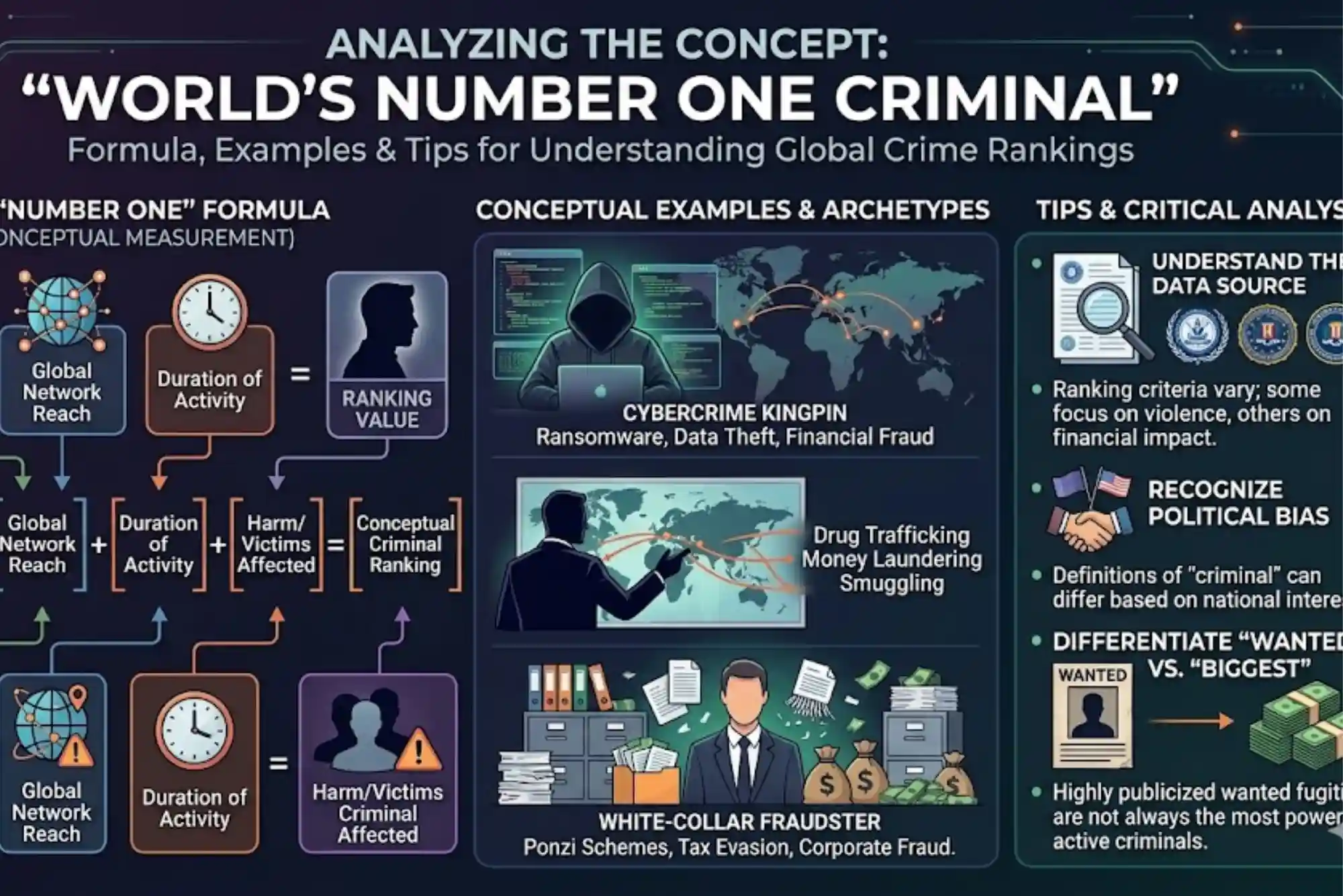
The question “who is the number one criminal in the world” is often asked out of curiosity, fueled by media headlines, movies, and public fascination with crime. It suggests that there is a definitive ranking system that identifies the most dangerous individual globally. However, in reality, the concept is far more complex.
There is no official global authority that assigns a universal “number one criminal” title. Instead, law enforcement agencies, governments, and international organizations focus on identifying individuals based on specific crimes, threats, and jurisdictions. Understanding this distinction is essential for anyone exploring criminal law or global justice systems.
What Defines a Criminal in Legal Terms?
A criminal is defined by law as an individual who has committed an act that violates established legal statutes. These acts can range from minor offenses to serious crimes such as fraud, trafficking, terrorism, and organized crime.
Legal definitions vary by country, but most systems share common principles. Crimes are categorized based on severity, intent, and impact. Courts evaluate evidence, intent, and circumstances before determining guilt and assigning penalties.
This structured approach highlights an important point: criminal status is not based on public opinion or media coverage, but on legal processes and judicial findings.
Is There Really a “Number One Criminal” in the World?
Differences Between Media Narratives and Legal Reality
Media outlets often label individuals as the “most wanted” or “most dangerous” based on ongoing investigations or high-profile cases. While these labels capture public attention, they do not reflect a formal ranking system.

Law enforcement agencies prioritize suspects based on threat level, urgency, and available intelligence. These priorities can change rapidly depending on new developments, making any fixed ranking impractical.
Global Crime Rankings and Law Enforcement Priorities
Organizations such as international policing bodies maintain lists of wanted individuals. These lists are dynamic and reflect current risks rather than permanent rankings.
For example, a suspect involved in transnational crime may be prioritized due to their ability to operate across borders, while another individual may be targeted for financial crimes affecting global markets.
This evolving approach ensures that law enforcement resources are allocated efficiently rather than based on static titles like “number one criminal.”
Factors That Determine High-Profile Criminal Status
Scale of Crime and Impact
One of the most significant factors in determining a criminal’s prominence is the scale of their activities. Crimes that affect large populations, economies, or international stability tend to receive greater attention.
For instance, large-scale financial fraud or organized crime operations can have far-reaching consequences, making those responsible a high priority for authorities.
International Jurisdiction and Reach
Criminals who operate across multiple countries present unique challenges. Their ability to evade local law enforcement and exploit jurisdictional gaps often elevates their profile.
International cooperation becomes essential in such cases, requiring coordination between governments and agencies to bring offenders to justice.
Media Coverage and Public Perception
Public perception plays a significant role in shaping who is seen as a “top criminal.” High media coverage can amplify certain cases, sometimes overshadowing equally serious but less publicized crimes.
While media attention can support law enforcement efforts by raising awareness, it can also create misconceptions about the scale and nature of criminal activity.
Real-World Examples of Notorious Criminals
Throughout history, there have been individuals whose criminal activities have gained global attention. These cases often involve organized crime leaders, financial fraudsters, or individuals linked to large-scale illegal networks.
What connects these figures is not a universal ranking, but the magnitude of their actions and the impact they have had on societies and economies. Some have led extensive criminal organizations, while others have exploited financial systems on a massive scale.
Importantly, many of these individuals were eventually apprehended through coordinated international efforts, highlighting the effectiveness of modern law enforcement systems.
The Role of International Law Enforcement
Global crime cannot be addressed by a single country alone. International cooperation is essential in tracking, monitoring, and prosecuting high-profile criminals.
Agencies work together to share intelligence, coordinate investigations, and ensure that criminals cannot escape justice by crossing borders. This collaborative approach is a cornerstone of modern criminal justice systems.
Legal professionals and organizations also play a critical role in ensuring that investigations and prosecutions adhere to due process and human rights standards.
Lessons from Global Crime Trends
Studying high-profile criminal cases provides valuable insights into evolving crime trends. Technology, globalization, and economic changes have all influenced the nature of modern crime.
Cybercrime, financial fraud, and cross-border illegal activities are becoming increasingly prominent. These trends highlight the need for adaptive legal frameworks and continuous monitoring.
For businesses and individuals alike, understanding these trends can help in identifying risks and implementing preventive measures.
Tips for Understanding Criminal Rankings Responsibly
When exploring topics like the “number one criminal in the world,” it is important to approach the subject critically. Avoid relying solely on sensational headlines or unverified claims.
Instead, focus on credible sources, legal documentation, and verified reports. Understanding the context behind criminal cases provides a more accurate and responsible perspective.
It is also essential to recognize that criminal justice systems are designed to ensure fairness and due process, rather than to create public rankings or labels.
Conclusion
The idea of a single “number one criminal in the world” is more myth than reality. While certain individuals may gain global attention due to the scale or nature of their crimes, there is no official or permanent ranking system.
Criminal identification and prioritization are based on legal frameworks, investigative needs, and international cooperation. By understanding these processes, readers can move beyond sensationalism and gain a clearer, more informed perspective on global crime.
Ultimately, the focus of modern justice systems is not on labels, but on accountability, fairness, and the rule of law. This approach ensures that all individuals are treated according to legal standards, regardless of public perception.