Corporate events are more than just gatherings—they are strategic opportunities to strengthen business relationships, build brand authority, and drive measurable outcomes. Whether you are organizing a product launch, annual conference, or executive meeting, success depends on careful planning and structured execution.
A well-crafted corporate event checklist acts as your roadmap. It ensures nothing is overlooked, timelines are maintained, and every element aligns with your business objectives. Without it, even experienced planners risk missing critical details.
This guide provides a practical, editorial-level approach to planning corporate events efficiently, using easy yet effective methods that professionals rely on.
Understanding the Purpose of a Corporate Event
Before diving into logistics, clarity of purpose is essential. Every corporate event serves a goal—whether it is networking, brand positioning, internal alignment, or client engagement.
Defining your objective early shapes every decision that follows, from venue selection to guest experience. For instance, a leadership summit demands a different tone and structure compared to a promotional event.
Organizations operating in regulated environments often consult legal professionals in Abu Dhabi to ensure compliance, especially when events involve contracts, partnerships, or public announcements.

Building a Strategic Corporate Event Checklist
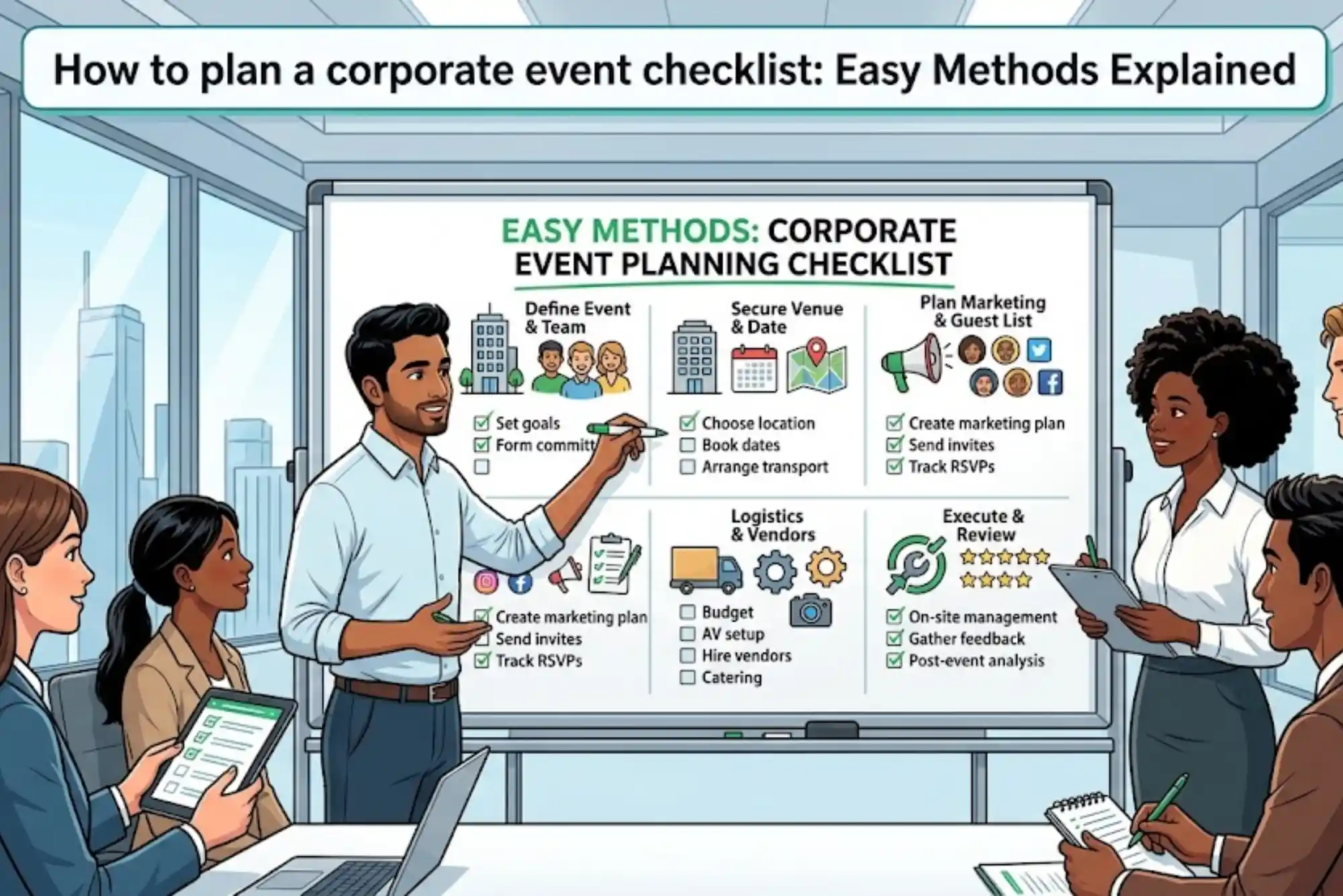
A strong checklist is not just a to-do list—it is a strategic framework. It should be divided into phases that guide your planning process from concept to execution.
Pre-Planning Phase
This stage focuses on foundational decisions. Start by defining your budget, identifying your target audience, and setting a realistic timeline. Budget clarity helps prevent overspending and ensures resources are allocated effectively.
Choosing the right date is equally important. Avoid conflicts with major industry events or holidays that could impact attendance.
Planning Phase
Once the basics are in place, move into detailed planning. This includes selecting a venue, arranging vendors, and finalizing the event agenda.
Venue selection should align with your event goals. Accessibility, capacity, and facilities play a major role in shaping attendee experience.
During this phase, contractual agreements with vendors must be handled carefully. Many businesses seek guidance from experts featured on Top Lawyer UAE to ensure terms are clearly defined and legally sound.
Execution Phase
Execution is where planning meets reality. Coordination becomes critical, and every team member must understand their role.
Ensure that all technical setups, catering arrangements, and guest management systems are tested before the event begins. A final walkthrough can help identify potential issues.
Post-Event Phase
The event does not end when attendees leave. Post-event evaluation is essential for measuring success and identifying areas for improvement.
Collect feedback, analyze attendance data, and review your budget performance. These insights will guide future events and enhance your planning strategy.
Setting a Realistic Budget
Budgeting is one of the most critical aspects of event planning. It influences every decision and determines the scale of your event.
Start by identifying major cost categories such as venue, catering, marketing, and technology. Then allocate funds based on priority rather than equal distribution.
Unexpected expenses are common in event planning. Setting aside a contingency fund ensures you can handle last-minute changes without compromising quality.
Choosing the Right Venue
The venue sets the tone for your entire event. It affects attendee perception, comfort, and overall experience.
When selecting a venue, consider location, accessibility, and available amenities. A centrally located venue with modern facilities often enhances attendance and engagement.
For events involving corporate agreements or partnerships, reviewing venue contracts is crucial. Legal clarity protects your organization from potential disputes.
Managing Vendors and Partnerships
Vendors play a key role in delivering a seamless event experience. From catering services to audiovisual providers, each partner contributes to the final outcome.
Clear communication and detailed contracts are essential when working with vendors. Expectations should be documented to avoid misunderstandings.
Businesses often explore resources under corporate legal services to ensure vendor agreements meet professional standards and protect their interests.
Creating an Engaging Event Experience
Modern corporate events go beyond formal presentations. Attendees expect engaging, interactive experiences that add value to their participation.
Incorporate elements such as live demonstrations, networking sessions, and interactive discussions. Personalization also plays a key role in enhancing engagement.
Technology can elevate the experience further. Tools like event apps, live polling, and virtual participation options make events more dynamic and inclusive.
Marketing and Promotion Strategies
Even the best-planned event will fail without proper promotion. A strategic marketing approach ensures your target audience is aware and motivated to attend.
Use a combination of digital channels such as email campaigns, social media, and professional networks. Consistent messaging reinforces your event’s value proposition.
Timing is critical in promotion. Start early and maintain momentum through regular updates and reminders.
Risk Management and Compliance
Every corporate event carries a level of risk. Identifying potential challenges in advance allows you to prepare effective solutions.
Risk management includes safety measures, contingency planning, and legal compliance. This is particularly important for large-scale or public events.
Working with professionals listed under experienced legal advisors ensures your event complies with local regulations and contractual obligations.
Measuring Event Success
Success should be measured against your original objectives. Metrics such as attendance, engagement, and return on investment provide valuable insights.
Post-event surveys are an effective way to gather feedback directly from attendees. Their responses highlight strengths and reveal areas for improvement.
Analyzing this data helps refine your future event strategies and ensures continuous growth.
Common Mistakes to Avoid
Even experienced planners can make mistakes. One common issue is underestimating timelines, which leads to rushed decisions and compromised quality.
Another mistake is ignoring attendee experience. Focusing solely on logistics without considering engagement can reduce the overall impact of the event.
Finally, neglecting legal and contractual details can result in serious complications. Proper documentation and professional guidance are essential.
Conclusion
Planning a corporate event requires more than organization—it demands strategy, attention to detail, and a clear understanding of business objectives. A structured corporate event checklist simplifies the process and ensures every aspect is handled professionally.
By following the methods outlined in this guide, you can create events that are not only successful but also impactful. From budgeting and venue selection to vendor management and post-event analysis, each step contributes to the overall outcome.
With the right approach, corporate events become powerful tools for growth, connection, and long-term success.