Accessing criminal records has become an essential part of modern decision-making, whether for employment screening, tenant verification, legal research, or personal safety. However, the process is not as straightforward as a simple online search. Understanding how to look up criminal records properly requires awareness of legal frameworks, reliable sources, and ethical considerations.
This comprehensive guide explains the correct and lawful ways to access criminal records, highlights real-world examples, and outlines best practices to ensure accuracy and compliance. Whether you are an employer, a legal professional, or an individual seeking information, knowing the right approach is critical.
What Are Criminal Records?
Criminal records are official documents that detail an individual’s interactions with law enforcement and the judicial system. These records may include arrests, charges, court proceedings, convictions, sentencing, and sometimes even acquittals.
The scope of criminal records varies depending on jurisdiction. In some regions, records may also include traffic violations, pending cases, or police reports. These documents are typically maintained by law enforcement agencies, courts, or government departments responsible for justice administration.
It is important to note that not all criminal records are publicly accessible. Access depends on local laws, privacy protections, and the purpose of the search.
Legal Considerations Before Searching Criminal Records
Privacy Laws and Restrictions
Before conducting any criminal record search, it is essential to understand the legal boundaries. Many jurisdictions have strict data protection and privacy laws that regulate who can access criminal records and for what purpose.

Unauthorized access or misuse of such information can lead to legal consequences. For example, using criminal history data for discriminatory hiring practices or without consent may violate employment and privacy laws.
When You Are Allowed to Access Records
Access to criminal records is typically permitted under specific circumstances. Employers may conduct background checks with the candidate’s consent, while individuals can often request their own records for verification or clearance purposes.
Legal professionals and law enforcement agencies usually have broader access, but even they must adhere to procedural requirements. Understanding these limitations helps ensure that your search remains compliant with applicable regulations.
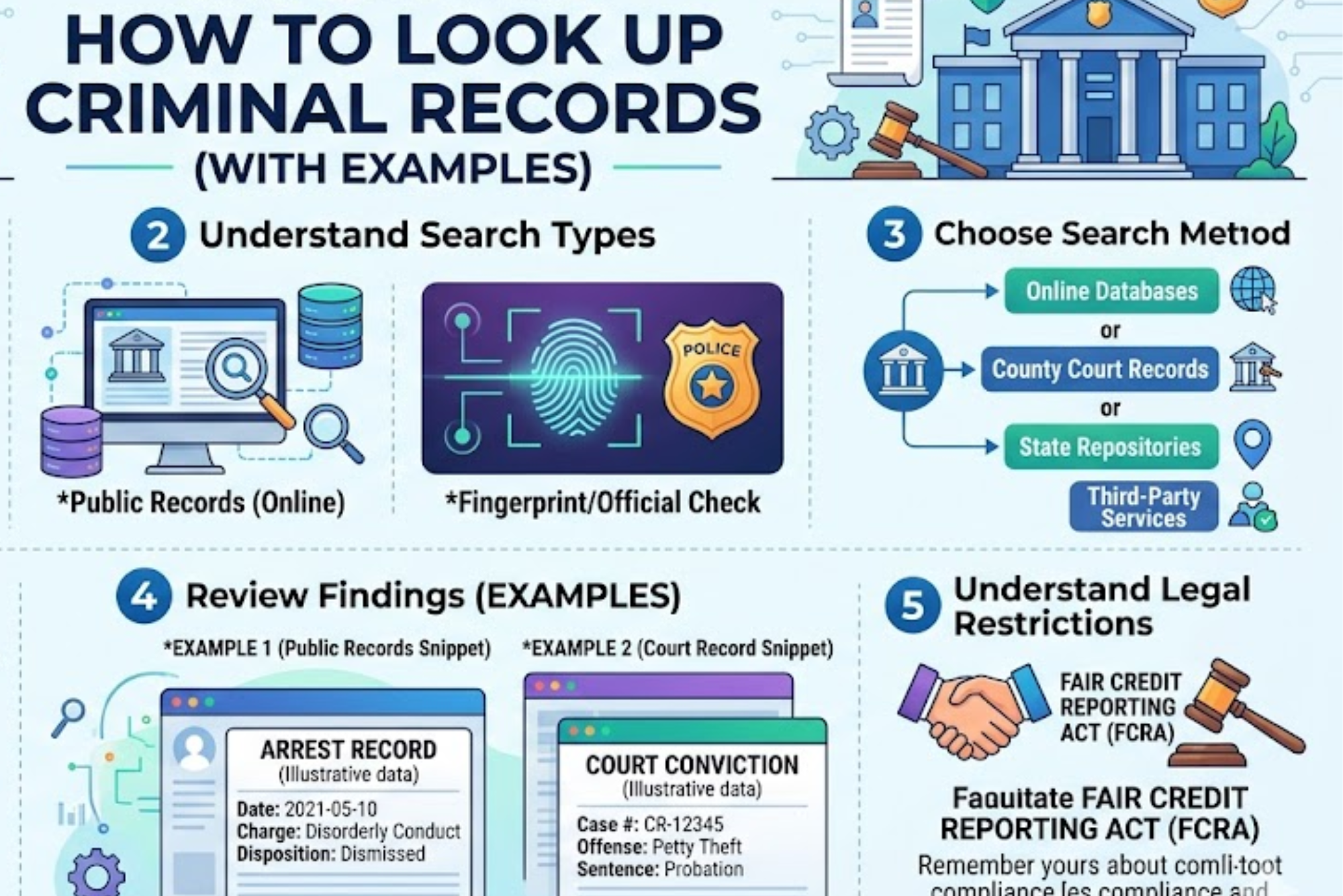
How to Look Up Criminal Records
Government and Official Sources
The most reliable way to look up criminal records is through official government channels. These may include police departments, ministry of justice portals, or authorized public service platforms. Many countries offer online systems where individuals can request criminal record certificates or police clearance documents.
These sources provide verified and up-to-date information, making them the preferred option for legal and professional use. While the process may require identity verification or formal applications, it ensures authenticity and legal validity.
Court Records and Public Databases
Courts maintain detailed records of criminal proceedings, including filings, hearings, and judgments. In many jurisdictions, these records are accessible to the public either online or through physical court offices.
Searching court records can provide deeper insights into specific cases, including case status and outcomes. However, navigating these databases may require familiarity with legal terminology and case identification systems.
Online Background Check Services
In addition to official sources, there are private platforms that aggregate public records and provide background check services. While these tools can be convenient, they should be used cautiously.
Not all third-party services guarantee accuracy or completeness. It is always advisable to cross-check information obtained from such platforms with official records to avoid relying on outdated or incorrect data.
Step-by-Step Process to Conduct a Criminal Record Search
Conducting a criminal record search involves a structured approach to ensure accuracy and compliance. The process typically begins with identifying the correct jurisdiction, as criminal records are maintained locally or nationally depending on the legal system.
Next, gather essential information about the individual, such as full name, date of birth, and identification details. This helps narrow down search results and avoid confusion with similar names.
Once the relevant authority or database is identified, submit a formal request if required. This may involve completing an application, providing identification documents, and paying a processing fee.
After receiving the results, review the information carefully. Verify details such as case status, dates, and outcomes to ensure accuracy. If necessary, consult legal professionals for interpretation, especially in complex cases.
Real-World Examples of Criminal Record Searches
Consider an employer conducting a background check before hiring a candidate for a sensitive role. By requesting a police clearance certificate through official channels, the employer ensures that the information is accurate and legally obtained.
In another scenario, an individual applying for a visa may need to provide a clean criminal record. They can request this document from the relevant government authority, which verifies their legal history and issues an official certificate.
Legal professionals often rely on court records when preparing cases. Accessing detailed case files allows them to understand precedents, evaluate evidence, and build stronger legal arguments.
These examples demonstrate how criminal record searches are used responsibly across different contexts, emphasizing the importance of accuracy and compliance.
Common Challenges and Mistakes to Avoid
One of the most common challenges in searching criminal records is incomplete or outdated information. Relying solely on unofficial sources can lead to incorrect conclusions and potentially serious consequences.
Another issue is misidentification. Individuals with similar names may be confused, resulting in inaccurate records being attributed to the wrong person. This highlights the importance of verifying identity details before drawing conclusions.
Legal compliance is another critical factor. Conducting searches without proper authorization or consent can lead to violations of privacy laws. Always ensure that your actions align with legal requirements in your jurisdiction.
Importance of Accuracy and Verification
Accuracy is the cornerstone of any criminal record search. Decisions based on incorrect information can have significant legal, professional, and personal consequences.
Verification involves cross-checking data from multiple sources, prioritizing official records, and ensuring that information is current. In sensitive situations, seeking legal advice can provide additional assurance and clarity.
Maintaining a responsible approach not only protects your interests but also respects the rights and privacy of individuals involved.
Conclusion
Understanding how to look up criminal records is essential in a world where information plays a critical role in decision-making. From employment screening to legal research, accessing accurate and reliable records requires a careful and informed approach.
By relying on official sources, соблюing legal requirements, and verifying information thoroughly, individuals and organizations can conduct effective and ethical criminal record searches. Ultimately, the goal is not just to find information, but to use it responsibly and lawfully in ways that promote fairness, transparency, and trust.