Filing a criminal complaint is often the first and most important step in seeking legal action after experiencing or witnessing a crime. Whether it involves theft, fraud, assault, harassment, or cybercrime, understanding how the process works can make a significant difference in how quickly and effectively authorities respond.
A criminal complaint is essentially a formal statement made to law enforcement or a legal authority, informing them about a possible criminal offense. It triggers the investigation process and helps ensure that justice is pursued under applicable criminal laws.
Many people hesitate to file complaints due to confusion about procedures or fear of legal complexity. However, the process is more accessible today than ever before, with multiple filing options available depending on your location and circumstances.
Difference Between a Complaint and an FIR
Before understanding how to file a criminal complaint, it is important to distinguish between a general complaint and a First Information Report (FIR).
A criminal complaint is an initial report submitted to the police or a legal authority describing an offense. It may or may not immediately lead to an FIR.
An FIR, on the other hand, is a formal document registered by the police when they determine that a cognizable offense has been reported. An FIR officially initiates the criminal investigation process.

In simple terms, every FIR begins with a complaint, but not every complaint becomes an FIR. Understanding this distinction helps set realistic expectations about the legal process.
Easy Methods to File a Criminal Complaint
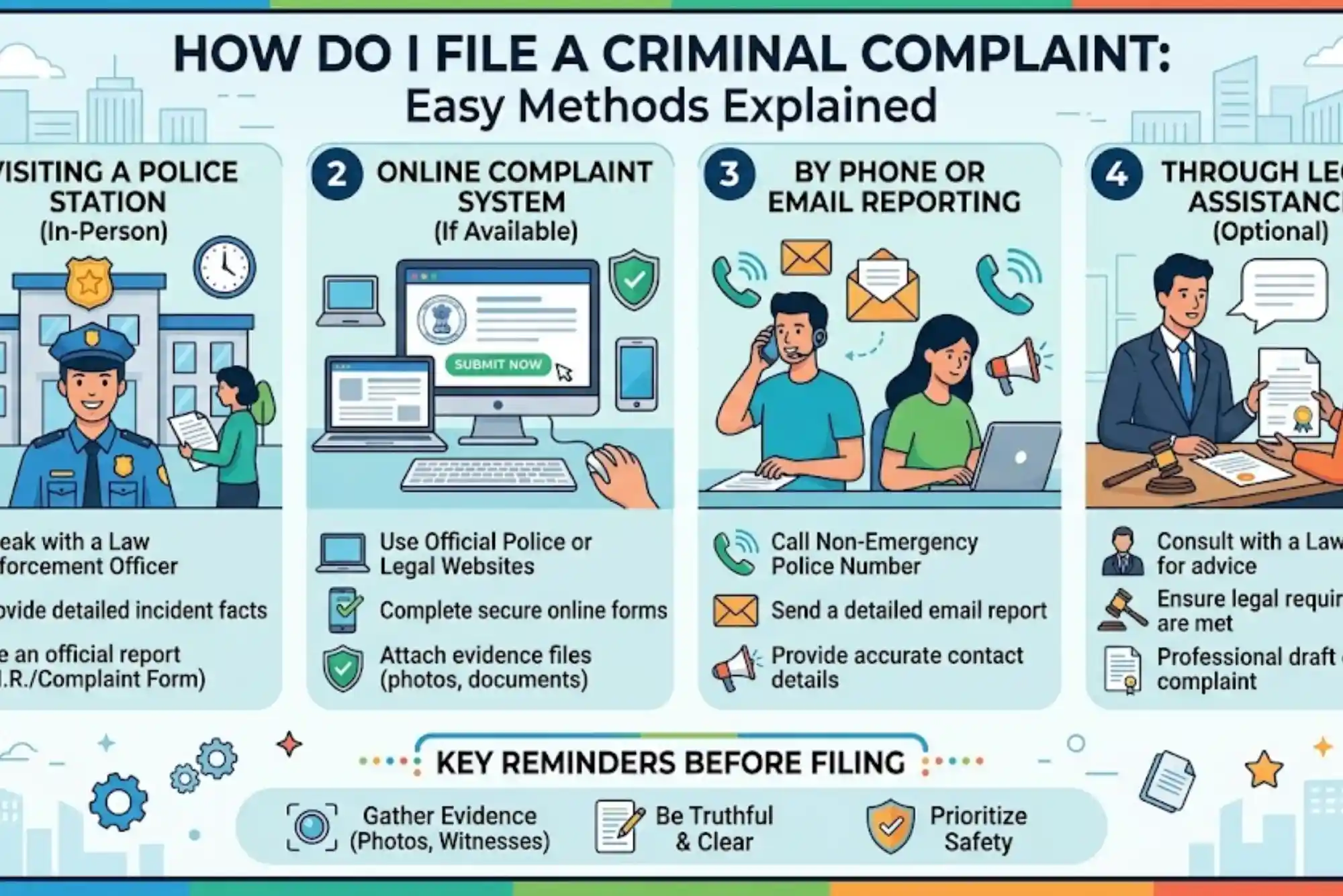
There are several ways to file a criminal complaint depending on the nature of the crime, urgency, and available legal systems in your region. Below are the most commonly used methods.
Filing at a Police Station
The most traditional and widely used method is visiting a local police station. You can verbally report the incident or submit a written complaint detailing what happened. The police officer on duty will record your statement and may register an FIR if the case qualifies under criminal law.
It is important to provide clear, factual, and chronological details. Avoid assumptions or emotional language, as this can affect clarity during investigation.
Filing an Online Complaint
Many jurisdictions now offer online complaint systems through official police or government portals. This method is especially useful for non-emergency cases such as cybercrime, fraud, or harassment.
Online reporting allows you to submit details, upload evidence such as screenshots or documents, and track the status of your complaint. Once submitted, authorities may contact you for further verification or action.
Filing Through a Magistrate or Court
In cases where the police do not take immediate action, individuals may escalate the matter by filing a complaint before a magistrate or relevant court authority. This legal route ensures judicial oversight and can compel authorities to investigate the matter.
This method is often used when a complainant believes that law enforcement has not acted appropriately or when the offense is serious in nature.
Filing Through a Lawyer
Engaging a legal professional can significantly simplify the complaint process, especially in complex cases. A lawyer can draft a legally sound complaint, ensure proper documentation, and guide you through procedural requirements.
Legal representation also helps in communicating with police or courts effectively, reducing the risk of procedural errors that could delay justice.
Information You Need Before Filing a Complaint
To ensure your complaint is effective, you should prepare all relevant information before submission. This includes:
- Date, time, and location of the incident
- Detailed description of what happened
- Names or descriptions of involved individuals (if known)
- Any supporting evidence such as photos, videos, or messages
- Witness details, if available
Providing accurate and complete information increases the chances of timely investigation and reduces misunderstandings during legal proceedings.
What Happens After You File a Criminal Complaint
Once a complaint is filed, authorities assess the information to determine whether it qualifies for further action. If it involves a cognizable offense, an FIR may be registered, and an investigation will begin.
The investigation process may include collecting evidence, questioning witnesses, and reviewing relevant documentation. In some cases, law enforcement may also conduct searches or arrests depending on the severity of the crime.
You may be required to cooperate with investigators throughout the process. This can include providing additional statements or clarifying details of your complaint.
Common Mistakes to Avoid
Many complaints face delays or rejection due to avoidable mistakes. Some common issues include:
- Providing incomplete or unclear information
- Exaggerating facts or including false statements
- Failing to preserve evidence
- Delaying the complaint unnecessarily
- Not following up with authorities after filing
Avoiding these mistakes helps ensure that your complaint is taken seriously and processed efficiently.
Practical Tips for a Strong Complaint
A well-prepared complaint increases the likelihood of a successful investigation. Here are some practical tips:
Always stick to facts and avoid emotional language. Organize your timeline clearly so authorities can understand the sequence of events. Keep copies of all documents and submissions for your records.
If possible, seek legal advice before filing, especially in serious or complex cases. A structured and legally sound complaint can significantly improve outcomes in the investigation process.
Conclusion
Understanding how to file a criminal complaint is essential for protecting your rights and ensuring justice is served. Whether you choose to report the crime at a police station, online, or through legal channels, the key is to act promptly and provide accurate information.
While the process may seem intimidating at first, modern legal systems are designed to make reporting accessible and structured. With the right preparation and awareness, individuals can confidently navigate the complaint process and contribute to a fair and effective justice system.
Taking timely action not only helps resolve individual cases but also strengthens the overall rule of law in society.