In today’s highly regulated world, background verification has become an essential part of employment, immigration, and legal compliance processes. Whether you are applying for a job, relocating to another country, or simply verifying your personal legal status, understanding how to check your criminal record is an important step toward transparency and preparedness.
A criminal record check is not just a bureaucratic requirement—it is a formal process that helps institutions confirm whether an individual has any recorded criminal history. The process varies by country, but the principles remain largely consistent: accuracy, identity verification, and official authorization.
What Is a Criminal Record?
A criminal record is an official document or database entry maintained by law enforcement or judicial authorities that contains information about a person’s interactions with the criminal justice system. This may include arrests, convictions, charges, or court proceedings.
It is important to understand that not all interactions with law enforcement result in a criminal conviction. In many legal systems, records may include dismissed cases or non-conviction data, depending on the jurisdiction and its data protection laws.
Criminal records are typically used by employers, immigration authorities, and licensing bodies to assess trustworthiness and legal eligibility.
Why You May Need to Check Your Criminal Record
There are several practical reasons why individuals may need to verify their criminal record. One of the most common reasons is employment screening, where employers require background checks before hiring candidates for sensitive roles.

Another common reason is immigration or visa applications. Many countries require applicants to submit a police clearance certificate or equivalent document to confirm they have no serious criminal history.
In some cases, individuals may also request their own record for personal awareness, especially if they believe there may be errors or outdated information in official databases.
Step-by-Step Process to Check Your Criminal Record
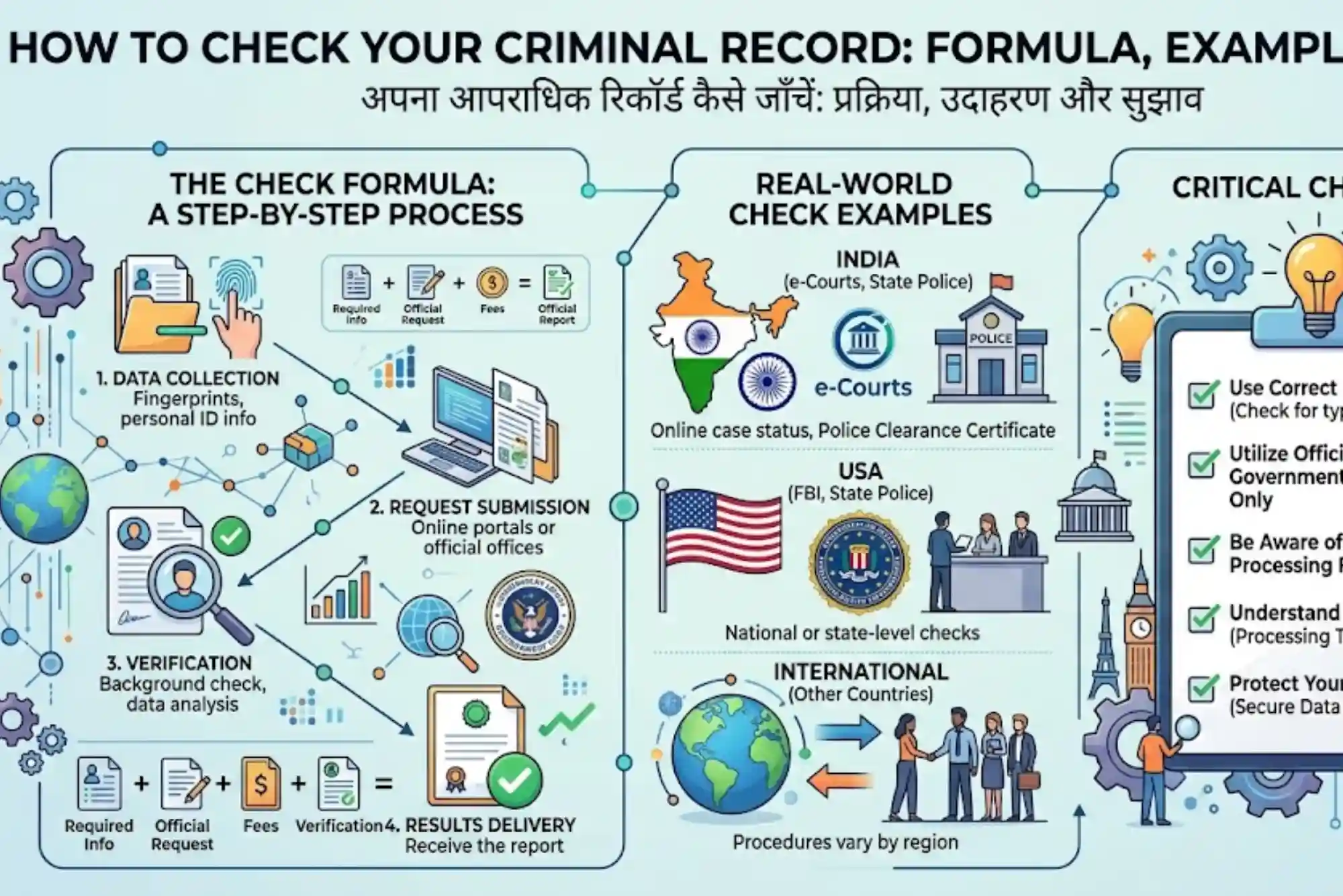
Although the exact process differs depending on the country, there is a general framework or “formula” that can help you understand how to approach a criminal record check efficiently and correctly.
Step 1: Identify Your Jurisdiction
The first step is determining which legal authority governs your criminal record. This is usually the country where you currently reside or where the legal incident may have occurred. Each jurisdiction has its own police department or judicial authority responsible for maintaining records.
Understanding jurisdiction is critical because submitting a request to the wrong authority can delay the entire process.
Step 2: Choose the Correct Authority
Once you identify the jurisdiction, the next step is selecting the appropriate authority. In many countries, this may be a national police service, ministry of interior, or federal background screening agency.
Some jurisdictions also provide online portals that allow individuals to apply for official background checks digitally, making the process faster and more accessible.
Step 3: Prepare Required Documents
Most criminal record checks require identity verification documents. These typically include a passport, national ID card, and sometimes proof of residence. Some authorities may also request fingerprints for more accurate identification.
Ensuring that your documents are valid and up to date is essential to avoid rejection or delays.
Step 4: Submit the Request
After preparing the required documents, you can submit your request either online or in person. Many modern systems now support digital applications, where users can upload documents and track their application status.
In traditional systems, you may need to visit a police station or authorized service center to complete the application process.
Step 5: Verify and Receive the Report
Once the request is processed, you will receive a criminal record report or a police clearance certificate. This document will either confirm the absence of criminal records or list relevant legal entries, depending on your history.
It is important to carefully review the document for accuracy, especially if it will be used for legal or immigration purposes.
Examples of Criminal Record Checks in Real Life
To better understand how criminal record checks work in practice, consider the following real-life scenarios.
In employment situations, companies often require candidates applying for financial or security-sensitive roles to submit background checks. This ensures that employees meet the ethical and legal standards required for the job.
In immigration cases, applicants seeking residency or work permits are often required to provide a police clearance certificate from their home country and any country they have lived in for a significant period.
Another example is professional licensing. Lawyers, healthcare professionals, and educators may need to submit clean criminal record checks before being granted a license to practice.
Common Challenges and Mistakes
One of the most common challenges individuals face is misunderstanding jurisdictional requirements. Applying through the wrong authority or submitting incomplete documents can significantly delay the process.
Another frequent issue is assuming that all records are automatically updated. In reality, outdated or incorrect information can sometimes appear in databases, making it important to verify accuracy.
Language barriers, unclear documentation requirements, and lack of official guidance can also create unnecessary complications for applicants.
Legal Considerations You Should Know
Criminal record data is highly sensitive and is protected under strict privacy and data protection laws in many jurisdictions. Access to such information is typically restricted to authorized individuals or organizations.
In some legal systems, individuals have the right to request access to their own records and may also request corrections if errors are found. However, procedures for corrections vary and often require formal legal processes.
It is also important to understand that misuse of criminal record information, such as unauthorized sharing or discrimination, may have legal consequences depending on the jurisdiction.
Expert Tips for a Smooth Background Check Process
To ensure a smooth and efficient criminal record check process, it is advisable to prepare all documents in advance and verify the specific requirements of the issuing authority.
Always double-check spelling, identification numbers, and supporting documents before submission. Small errors can lead to delays or rejections.
If you are applying for immigration or employment purposes, start the process early to account for processing times, which may vary depending on workload and verification complexity.
Finally, keep a copy of your criminal record certificate for future use, especially if you anticipate needing it for multiple applications.
Conclusion
Understanding how to check your criminal record is an important part of navigating modern legal, professional, and immigration systems. While the process may vary across jurisdictions, the core steps remain consistent: identify the authority, prepare documentation, submit a request, and review the final report.
By following a structured approach and avoiding common mistakes, individuals can complete the process efficiently and with confidence. Whether for employment, travel, or personal verification, a clear understanding of your legal record helps ensure transparency and trust in both personal and professional contexts.