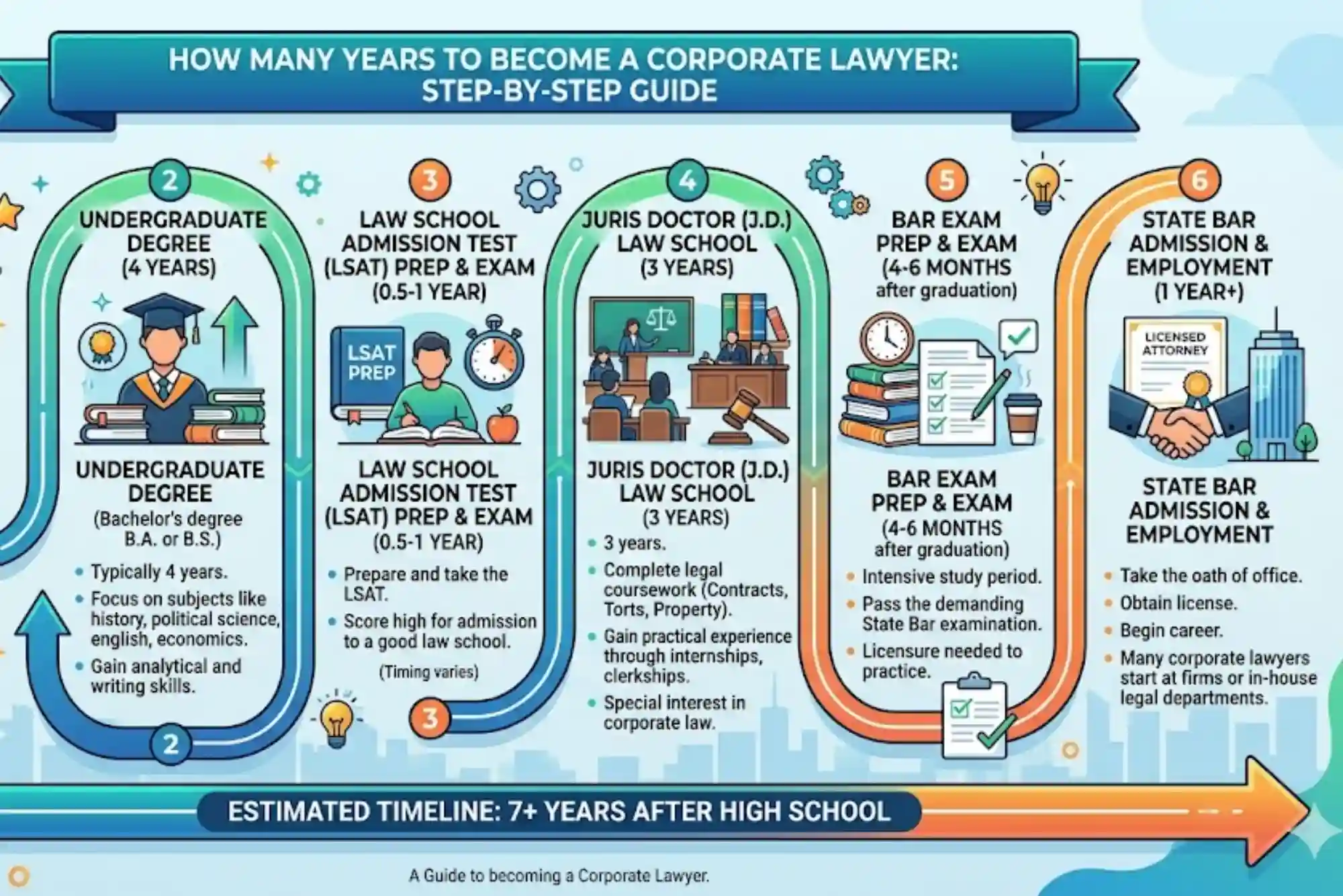
Becoming a corporate lawyer is a long-term commitment that requires dedication, academic focus, and a clear understanding of the legal profession. For students and professionals considering this path, one of the most important questions is how many years it takes to become a corporate lawyer. While the answer varies depending on the country and educational route, there is a structured process that most individuals follow.
This guide offers a clear, professional overview of the timeline, steps, and expectations involved in building a career in corporate law. It is designed to help you make informed decisions and plan your journey effectively.
Understanding the Role of a Corporate Lawyer
A corporate lawyer specializes in legal matters related to businesses and corporations. Their responsibilities include drafting contracts, ensuring regulatory compliance, advising on mergers and acquisitions, and protecting a company’s legal interests.
Unlike other legal fields, corporate law requires a strong understanding of both legal frameworks and business operations. Professionals in this field often work closely with executives, finance teams, and stakeholders to guide strategic decisions.
How Many Years Does It Take to Become a Corporate Lawyer?
On average, becoming a corporate lawyer takes between six to ten years after completing secondary education. This timeline includes undergraduate studies, law school, and professional licensing.
In some countries, students can enroll in integrated law programs directly after high school, reducing the total time required. In others, a separate bachelor’s degree is mandatory before entering law school.

Typical Timeline Overview
The journey usually begins with a bachelor’s degree, followed by a law degree and then passing a bar or licensing exam. Each stage builds essential knowledge and practical skills necessary for the profession.
Step 1: Completing Secondary Education
The foundation of any legal career starts in school. Students interested in corporate law should focus on subjects that strengthen analytical thinking, communication, and comprehension. English, economics, and business-related subjects are particularly useful.
Participation in debates, writing competitions, and public speaking activities can also help develop the confidence and articulation required in legal practice.
Step 2: Earning a Bachelor’s Degree
In many education systems, the next step is completing a bachelor’s degree, which typically takes three to four years. While there is no mandatory major, fields such as political science, business administration, and economics are highly relevant.
Maintaining strong academic performance is essential, as law schools often consider grades during the admission process. Students are also encouraged to pursue internships or part-time roles related to legal or corporate environments.
Step 3: Attending Law School
Law school is a critical stage in becoming a corporate lawyer. Depending on the jurisdiction, this may involve pursuing an LLB or a Juris Doctor (JD) degree. The duration generally ranges from three to five years.
During this period, students study core legal subjects such as contract law, corporate governance, taxation, and commercial law. Many institutions also offer specialized courses that allow students to focus on corporate law.
Practical training through moot courts, legal clinics, and internships is an integral part of law school education. These experiences provide hands-on exposure to real-world legal scenarios.
Step 4: Gaining Practical Experience
Beyond academic qualifications, practical experience plays a significant role in shaping a successful legal career. Internships with law firms or corporate legal departments allow aspiring lawyers to understand how legal principles are applied in business settings.
Working under experienced professionals also helps build professional networks, which can be valuable when seeking employment after graduation.
Step 5: Passing the Bar Exam or Licensing Requirements
After completing a law degree, graduates must obtain a license to practice law. This usually involves passing a bar exam or meeting specific regulatory requirements set by the legal authority in their country.
Preparation for the bar exam can take several months and requires a deep understanding of legal concepts. Successfully passing this stage officially qualifies an individual to practice as a lawyer.
Step 6: Starting a Career in Corporate Law
Newly licensed lawyers typically begin their careers as associates in law firms or as junior legal advisors within companies. This stage focuses on gaining experience, handling cases, and developing expertise in corporate law.
With time and consistent performance, professionals can advance to senior roles, including senior associate, partner, or in-house counsel for large corporations.
Skills Required to Succeed in Corporate Law
Corporate law is a demanding field that requires a combination of technical knowledge and soft skills. Strong communication skills are essential for drafting legal documents and advising clients. Analytical thinking helps in solving complex legal issues, while attention to detail ensures accuracy in legal work.
Understanding business operations is equally important, as corporate lawyers often deal with financial and strategic matters. Time management and the ability to work under pressure are also key attributes for success.
Challenges Along the Way
The path to becoming a corporate lawyer is not without challenges. The long duration of study, high competition, and financial investment can be demanding. Law school itself is rigorous, requiring extensive reading, research, and critical thinking.
However, these challenges are part of the professional development process and help build resilience and expertise.
Career Opportunities and Growth
Corporate law offers diverse career opportunities. Professionals can work in law firms, multinational corporations, financial institutions, or government agencies. Some choose to specialize further in areas such as mergers and acquisitions, corporate finance, or compliance.
Over time, experienced lawyers may transition into leadership roles or establish their own legal practices. The career path is flexible and allows for continuous growth.
Why Choose Corporate Law?
Corporate law is an attractive career choice for individuals interested in both law and business. It offers competitive salaries, professional recognition, and the opportunity to work on high-value transactions.
Moreover, the global nature of business today means that corporate lawyers often have opportunities to work internationally, gaining exposure to different legal systems and markets.
Conclusion
So, how many years does it take to become a corporate lawyer? In most cases, the journey spans between six to ten years, depending on the educational pathway and country-specific requirements. While the process is demanding, it equips individuals with the knowledge and skills needed to succeed in a highly respected profession.
For those willing to commit to the journey, corporate law offers a rewarding and dynamic career with long-term growth potential. Careful planning, consistent effort, and a passion for the field are key to achieving success.