



Immigration & Visa
How many points needed for australian immigration: Everything You Need to Know
Introduction Understanding how many points are needed for Australian immigration is an important first step for skilled workers planning to...
Moving to the United States is a major goal for people seeking better career opportunities, higher education, family reunification, or a safer and more stable future. If you are wondering, “How can I immigrate to the USA?” the first step is understanding that there is no single immigration route for everyone. Your eligibility depends on your personal circumstances, purpose for moving, qualifications, family connections, and financial situation.
The good news is that the United States offers several lawful immigration pathways, including family-sponsored immigration, employment-based visas, student visas, and humanitarian protection for eligible individuals. Some options can lead to permanent residency, while others allow you to stay temporarily for a specific purpose.
This guide explains how to immigrate to the USA step by step, from choosing the right visa category to submitting an application, attending an interview, and preparing for life in America. Understanding the process before applying can help you avoid unnecessary expenses, delays, and common mistakes.
The answer depends on why you want to move and whether you qualify under US immigration law. Before completing any application, identify the category that best matches your situation.
If you have a qualifying relative who is a US citizen or lawful permanent resident, family sponsorship may provide a route to permanent residency. US citizens can generally petition for spouses, unmarried children, parents under specific conditions, and siblings. Permanent residents can petition for spouses and unmarried children, subject to applicable rules.
Immediate relatives of US citizens are not subject to the same annual numerical limits as family preference categories. Other family-sponsored applicants may face waiting periods depending on their category and country of chargeability.
Employment-based immigration may suit professionals, skilled workers, researchers, executives, and certain other applicants. Some categories require a US employer to sponsor the applicant, while others allow eligible individuals to petition independently.
For example, certain applicants with extraordinary ability or qualifying national-interest work may be eligible to file without a traditional employer-sponsored petition. Many employment-based routes involve detailed evidence of qualifications, work experience, job offers, or professional achievements.
If your primary goal is education, you may qualify for an F-1 student visa or another appropriate student or exchange visitor category. Generally, you must first gain admission to an eligible institution or program and satisfy the relevant financial and visa requirements.
A student visa is not itself a permanent immigration pathway. However, some graduates may later qualify for employment-based status or another lawful immigration category. Any change of status or future immigration plan must comply with the applicable rules.
The Diversity Visa (DV) program makes immigrant visas available to eligible applicants from countries with historically lower rates of immigration to the United States, subject to program rules and annual limits.
Eligibility depends on the applicable country rules and educational or work-experience requirements. Being selected does not guarantee a visa. Applicants must complete the required process, meet all eligibility criteria, and receive a visa before the relevant deadline.
Certain people may qualify for asylum, refugee admission, or other humanitarian protections. These programs have distinct eligibility standards and procedures. They are not general-purpose immigration options and should not be treated as substitutes for employment or family immigration.
People facing persecution or other serious risks should obtain reliable, situation-specific legal guidance before making decisions about travel or an application.
Understanding the process becomes easier when you break it into manageable stages. Although the exact procedure varies by immigration category, the following steps provide a useful starting point.
Begin by deciding whether you want to live permanently in the United States or stay temporarily for education, employment, business, or another permitted purpose.
If your goal is permanent residency, research immigrant visa categories and eligibility requirements. If you intend to study or work temporarily, investigate the nonimmigrant visa category that matches your plans.
Be realistic about your qualifications, family connections, finances, and timeline. Choosing an unsuitable category can lead to unnecessary fees or a refused application.
Once you identify a possible route, review the official eligibility requirements carefully. These may include age-related requirements in certain programs, educational qualifications, work experience, family relationships, financial support, admissibility, and other conditions.
For employment-based immigration, check whether your qualifications match the selected category and whether an employer petition or labor certification is required. For family sponsorship, confirm that your relative is eligible to petition for you and can meet the applicable sponsorship requirements.
Do not assume that meeting one requirement guarantees approval. Immigration authorities assess the complete application and may request additional evidence.
Many immigration categories require a qualifying person or organization to submit a petition.
For family-based immigration, the eligible relative generally files Form I-130, Petition for Alien Relative. For many employer-sponsored categories, the employer files the appropriate petition, commonly Form I-140 for employment-based immigrant workers.
Some applicants may qualify to petition for themselves under specific categories. The forms, supporting evidence, and legal requirements depend on the immigration route.
Keep copies of every submitted document, payment confirmation, and official notice. These records can help you track the case and respond accurately to future requests.
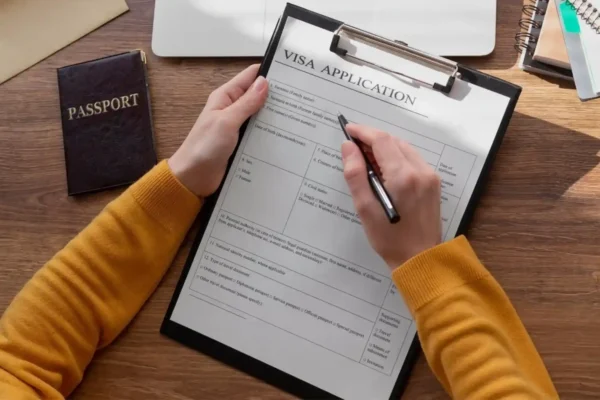
After confirming the correct immigration category, complete the required forms using accurate and consistent information. Depending on your case, the process may involve a petition, an immigrant visa application, or a nonimmigrant visa application.
For many applicants applying for an immigrant visa from outside the United States, Form DS-260 is completed after the case reaches the appropriate stage. Nonimmigrant visa applicants commonly use Form DS-160.
Always check the official instructions for your specific category. Forms, fees, filing addresses, and procedures can change, so information from an old online article may no longer be accurate.
Documentation is an essential part of the immigration process. Your required documents will depend on the category, but they may include a valid passport, birth certificate, marriage certificate, evidence of a qualifying family relationship, academic records, employment documents, financial sponsorship records, and police certificates where required.
Documents that are not in English may need certified translations according to the relevant instructions. Some applicants must also provide civil documents in a particular format or obtain official records from the issuing authority.
Review every document for spelling differences, missing information, and inconsistent dates. If your name appears differently across records, determine what evidence or explanation the relevant authority requires rather than altering official documents.
Immigration applications often involve multiple fees, such as petition fees, visa application fees, medical examination expenses, and other required charges. The total cost varies according to the immigration category and individual circumstances.
Use official US government sources to confirm the latest amounts and approved payment methods. Keep receipts and follow the instructions provided with your case number.
Processing times can vary substantially. Some cases move relatively quickly, while others take years because of annual visa limits, background checks, administrative processing, or requests for additional evidence.
Many immigrant visa applicants must attend an interview at a US embassy or consulate. Before the interview, review your application and supporting documents so you can answer questions clearly and truthfully.
Depending on your category, you may need a medical examination with an authorized panel physician. Required vaccinations and other medical procedures are determined by the applicable immigration rules.
An interview does not guarantee approval. Consular officers may request additional documents or place a case in administrative processing. Follow all instructions and respond within any specified deadlines.
If your immigrant visa is approved, check the visa information and validity period carefully. Complete any required immigrant fee payments and travel within the permitted period.
A visa allows you to travel to a US port of entry and request admission; it does not independently guarantee admission. US Customs and Border Protection makes the final admission decision.
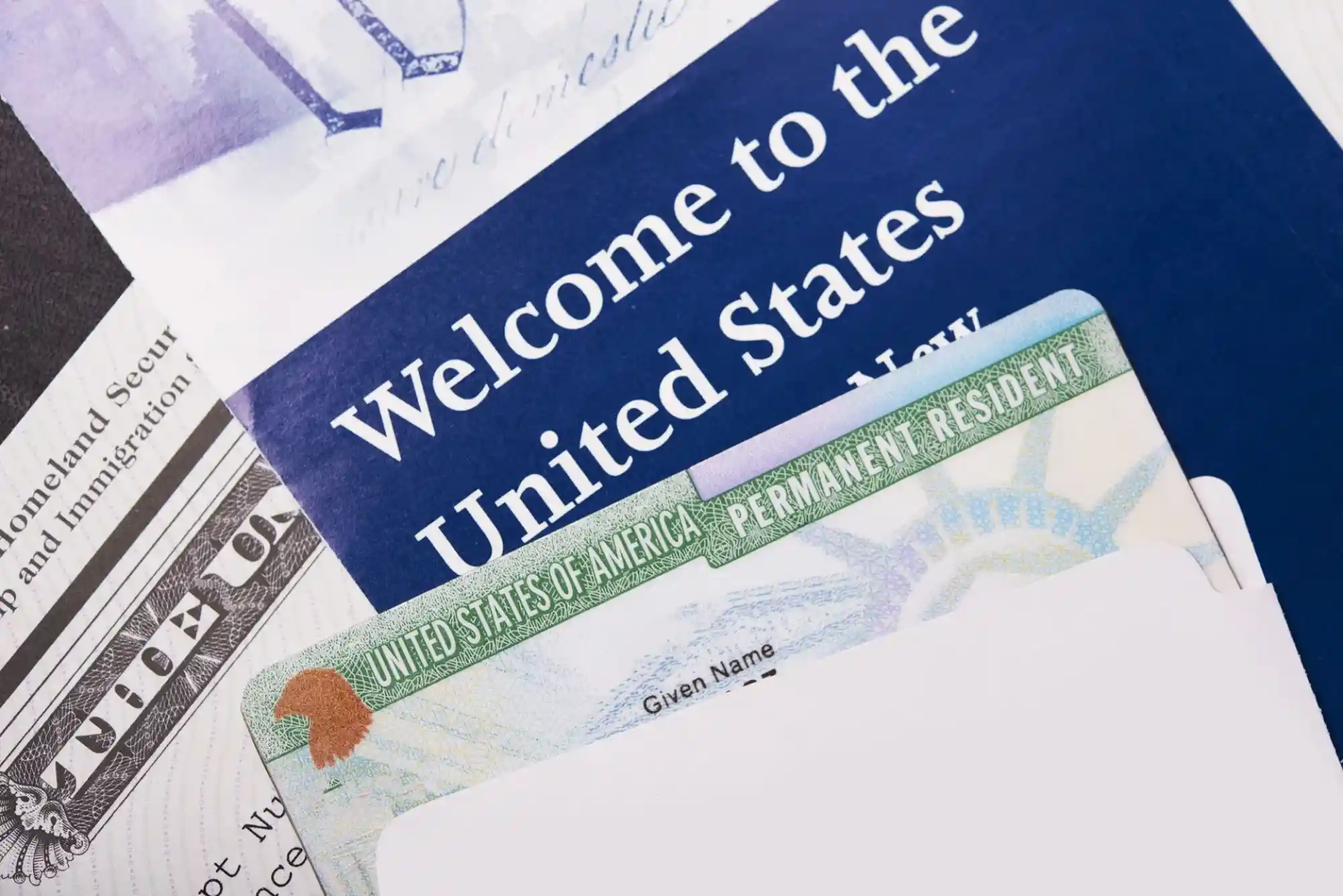
After admission as a lawful permanent resident, follow the instructions for receiving your Green Card and maintaining your status. If your application is refused or delayed, read the official explanation and determine whether further documentation, a new application, or qualified legal advice is appropriate.
The cost depends on the immigration category, the number of applicants, required documentation, and whether professional assistance is needed. Government fees are only one part of the overall expense.
Applicants may need to budget for petition and visa fees, passport renewals, translations, document certification, medical examinations, travel, accommodation, and initial living expenses. Employment-based cases may also involve employer-related expenses, while family-sponsored applicants may need to provide evidence of financial support.
There is no single fee that applies to everyone who wants to immigrate to the USA. Check the official fee schedule before submitting forms, and avoid paying anyone who promises guaranteed approval or special access to an immigration officer.
There is no universal processing timeline. The time required depends on the visa category, the applicant's country of chargeability, government workload, and whether a visa number is immediately available.
Immediate relatives of US citizens generally have an advantage because their immigrant visa category is not subject to annual numerical limits. Family preference and employment-based applicants may need to wait for a visa to become available, sometimes for several years.
Other factors can include missing documents, background checks, administrative processing, and requests for further evidence. Check USCIS processing-time information, the Department of State's Visa Bulletin, and official case updates for the most relevant information.
One of the biggest mistakes is choosing a visa category without checking its eligibility requirements. Another is submitting incomplete forms or documents that contradict information provided elsewhere in the application.
Applicants should never provide false information, use fraudulent documents, or hide facts that immigration authorities request. Misrepresentation can have serious immigration consequences, including inadmissibility.
Be cautious of unlicensed consultants and online services that promise guaranteed visas. A legitimate professional should explain the applicable process, realistic risks, costs, and limitations without guaranteeing an outcome.
If your circumstances are complicated, consult a qualified US immigration attorney or an accredited representative authorized to provide immigration assistance. If you need help with a separate legal issue in the UAE, a resource such as Lawyer in Dubai may help you explore local legal services. For US immigration questions, however, confirm that your adviser is qualified to handle US immigration law.
Professional guidance may be particularly useful when you have a previous visa refusal, a complicated family history, an employment-based petition, a criminal record, or concerns about inadmissibility. An experienced US immigration attorney can assess your circumstances, explain available options, and help you understand the documentation required.
Not every applicant needs to hire an attorney. Many straightforward applications can be prepared by following official instructions. The important point is to know when your situation requires specialized advice.
If you are researching legal services, toplawyer provides a starting point for exploring legal resources in the UAE. Its Immigration & Visa section may also be useful for understanding immigration-related legal topics. Remember that US immigration law is different from UAE immigration law, so verify that any professional you hire is authorized and experienced in the jurisdiction relevant to your case.
If you are asking, “How can I immigrate to the USA?” the best approach is to identify your purpose, check your eligibility, and follow the correct legal pathway. Family sponsorship, employment-based immigration, the Diversity Visa program, and certain humanitarian options may offer routes to permanent residency, while student and temporary work visas serve different purposes.
Prepare accurate documents, verify current fees, monitor your case, and use official government information whenever possible. Immigration can be a lengthy process, but careful preparation helps you make informed decisions and avoid preventable mistakes.
Ready to take the next step? Visit the official US Citizenship and Immigration Services website at uscis.gov and the US Department of State website at travel.state.gov to review the requirements for your situation. If your case is complex, seek advice from a qualified US immigration professional before submitting an application.
You may qualify for permanent residency through family sponsorship, employment-based immigration, the Diversity Visa program, or certain humanitarian pathways. Your eligibility depends on the specific category and your individual circumstances.
Yes, some pathways do not require a traditional US job offer. Examples may include qualifying family-based immigration, the Diversity Visa program, and certain employment-based categories that allow self-petitioning. Eligibility requirements vary.
There is no single easiest route for everyone. The most suitable option depends on your family relationships, professional qualifications, nationality, and eligibility. A route that works for one applicant may not be available to another.
There is no fixed total. Costs depend on the visa category, government fees, medical examinations, document preparation, travel, and initial living expenses. Check the official fee schedule and plan for expenses beyond the application itself.
Yes, Pakistani citizens may apply through eligible US immigration categories, including family-sponsored and employment-based routes, and may participate in the Diversity Visa program when the applicable country eligibility rules permit. Applicants must meet all relevant requirements, and processing times vary.
The timeline depends on your immigration category, visa availability, country of chargeability, and case circumstances. Some applicants may qualify relatively quickly, while others face lengthy waiting periods.
Some routes permit self-petitioning or do not require a family or employer sponsor. However, many family-sponsored and employment-based categories require a qualifying petitioner. Check the rules for the specific category before applying.
A tourist visa is generally intended for temporary visits, not permanent relocation. It does not provide permanent residency or permission to work. Anyone considering a change in immigration status must follow the applicable legal requirements and avoid misrepresenting their original intentions.
The articles published on TopLawyer.ae are prepared for general educational and informational purposes only and do not constitute formal legal advice or the formation of an attorney-client relationship. UAE laws, judicial precedents, and regulatory procedures are subject to frequent legislative amendments. Readers should consult a licensed legal advocate or registered law firm regarding their specific circumstances prior to taking legal action.

Licensed advocates and legal consultants experienced in this practice area across the UAE.
Introduction Understanding how many points are needed for Australian immigration is an important first step for skilled workers planning to...

Introduction How easy is it to immigrate to Canada? The answer depends on your education, work experience, language skills, financial...

Introduction Can immigration officers check your phone when you travel internationally? Yes, in many countries, immigration or border authorities can...
