




Immigration & Visa
How many points needed for australian immigration: Everything You Need to Know
Introduction Understanding how many points are needed for Australian immigration is an important first step for skilled workers planning to...
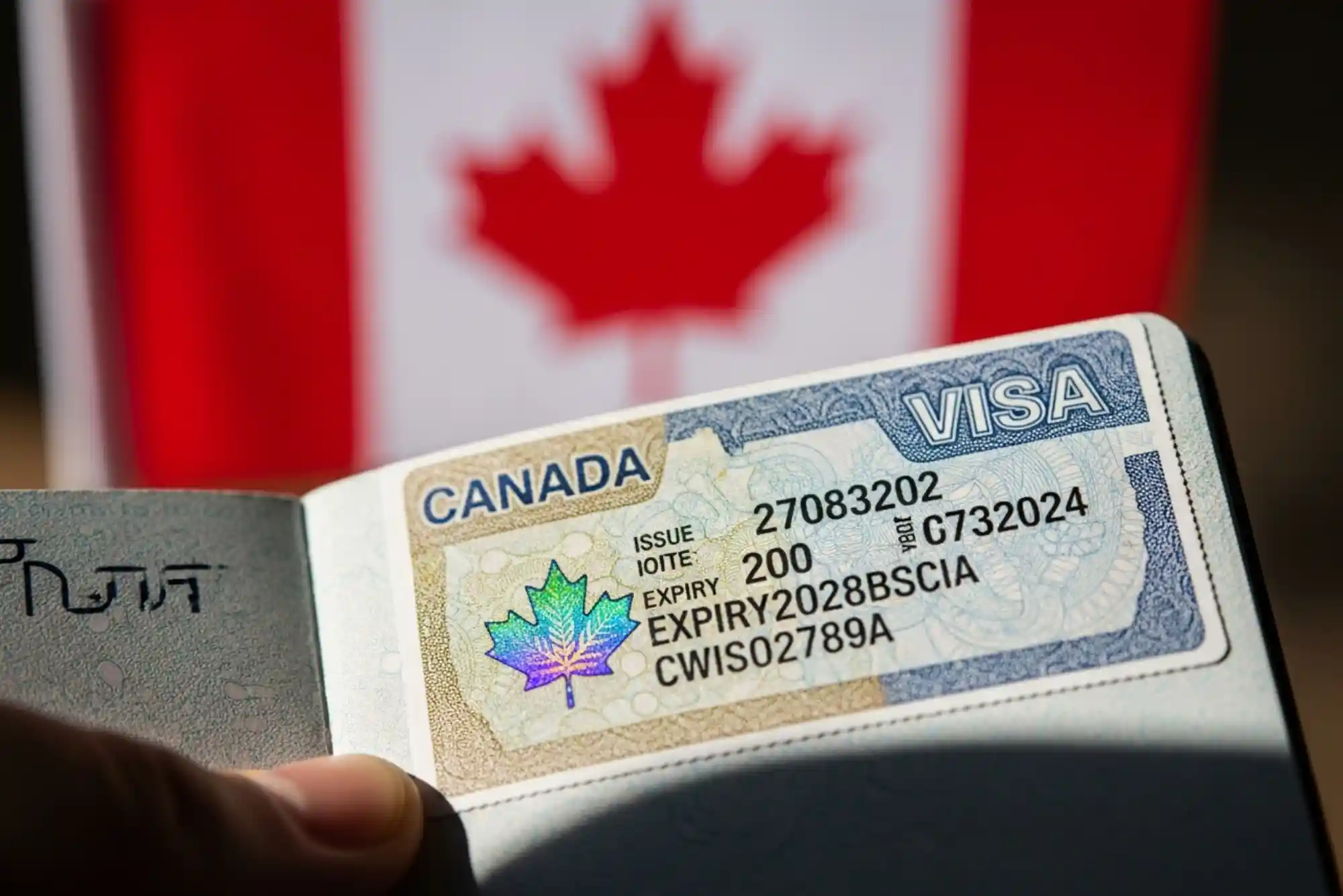
Canada is a popular destination for skilled workers, international graduates, and families seeking better career opportunities and long-term stability. However, before applying, many people ask an important question: how many points are needed for Canada immigration? The answer depends on the immigration program you choose, your age, education, language proficiency, work experience, and other eligibility factors.
For applicants using Express Entry, two different point systems matter. The first is the 67-point eligibility assessment for the Federal Skilled Worker Program (FSWP). The second is the Comprehensive Ranking System (CRS), which ranks eligible candidates against other people in the Express Entry pool. Understanding this distinction is essential because meeting the minimum eligibility score does not automatically guarantee an invitation to apply for permanent residence.
This step-by-step guide explains how many points you need for Canada immigration, how to calculate your score, what can improve your chances, and which mistakes you should avoid before submitting your profile.
The number of points required depends on the immigration pathway.
For the Federal Skilled Worker Program, applicants generally need at least 67 out of 100 points on the eligibility selection grid to qualify under that program. This assessment considers factors such as age, education, language ability, work experience, arranged employment, and adaptability.
Express Entry uses a separate ranking system called the Comprehensive Ranking System, or CRS. The CRS has a maximum score of 1,200 points. There is no single permanent CRS cutoff for all applicants. Immigration authorities conduct invitation rounds, and the score required can change according to the round's category, the number of invitations, and the candidates in the pool.
For example, an applicant may meet the FSWP's 67-point requirement but have a CRS score that is not high enough for a particular invitation round. Conversely, candidates eligible through other Express Entry programs do not necessarily need to meet the FSWP's 67-point threshold.
It is therefore important to identify the correct immigration program before calculating your points.
The FSWP selection grid assesses whether an applicant meets the program's eligibility criteria. Its six factors contribute to a total of 100 points.
Age can contribute up to 12 points, with the highest score generally available to applicants aged 18 to 35. Education can contribute up to 25 points, depending on the qualification. Language proficiency can contribute up to 28 points across the first and second official languages. Skilled work experience can contribute up to 15 points, arranged employment can contribute up to 10 points, and adaptability can contribute up to 10 points.
These factors are assessed according to specific government rules. Applicants should not assume that every degree, job, or language test result automatically earns the maximum available points.
The CRS ranks Express Entry candidates rather than simply deciding whether they meet the FSWP selection threshold. It considers factors including age, education, official-language proficiency, Canadian work experience, and certain combinations of qualifications and experience.
The CRS also has additional factors, including eligible provincial nominations and certain Canadian educational credentials. A provincial nomination linked to an eligible Express Entry pathway can provide 600 additional CRS points, which can significantly improve a candidate's ranking.
A higher CRS score generally improves an applicant's position relative to other candidates, but an invitation is never guaranteed solely by reaching a particular score.
Before calculating how many points are needed for Canada immigration, determine which program matches your circumstances.
The three main federal programs managed through Express Entry are the Federal Skilled Worker Program, the Canadian Experience Class (CEC), and the Federal Skilled Trades Program (FSTP).
The FSWP is designed for eligible skilled workers with qualifying work experience, including people who gained their experience outside Canada. Applicants must meet the program's requirements, including relevant work experience, language ability, and, where applicable, proof of settlement funds.
The CEC is generally intended for people with qualifying Canadian work experience. It has its own eligibility requirements and does not use the FSWP's 67-point selection grid.
The FSTP is designed for eligible skilled tradespeople who meet its requirements, which include qualifying work experience and other conditions related to the trade and employment or qualification arrangements.
You may also explore provincial nominee programs, which allow participating provinces and territories to nominate eligible candidates according to their own labour-market and immigration priorities.
Choosing the correct pathway prevents you from relying on a point threshold that does not apply to your situation.
Age is an important factor in the Federal Skilled Worker selection grid and the Express Entry CRS.
Under the FSWP selection grid, applicants aged 18 to 35 generally receive the maximum 12 age points. Points decrease as age increases beyond 35, and applicants aged 47 or older receive no age points under this factor.
The CRS also awards age-related points, but its calculation is different. The number of points available depends on whether the applicant has an accompanying spouse or common-law partner.
For example, a younger applicant with strong language skills and a recognised qualification may receive a more favourable CRS score than an older applicant with otherwise similar credentials.
Age is not the only factor, however. Strong language results, higher education, qualifying work experience, and other eligible credentials may help compensate for fewer age points.
Because age is assessed according to the applicable program rules and the candidate's circumstances, use the official Canadian immigration calculator rather than relying on a general estimate.
Education can significantly affect both eligibility and CRS ranking.
Under the FSWP selection grid, a doctoral degree can receive up to 25 points, while a master's degree can receive up to 23 points. Other qualifications receive different scores according to the grid's rules.
For education completed outside Canada, applicants to the FSWP generally need an Educational Credential Assessment (ECA) from an authorised organisation to demonstrate how their qualification compares with Canadian educational standards. An ECA is also important for claiming the relevant education points where required.
For example, a bachelor's degree earned overseas may be assessed as equivalent to a Canadian bachelor's degree, but the result depends on the institution, credential, and assessment.
The CRS may award additional points for recognised education credentials and certain combinations of education, language ability, and Canadian work experience. A credential's value depends on the applicable rules, not just the title printed on a certificate.
Before submitting your profile, check whether your ECA is valid and whether it accurately reflects every qualification you intend to claim.
Language proficiency is one of the most influential factors when calculating how many points are needed for Canada immigration.
Applicants must take an approved language test, such as IELTS General Training, CELPIP-General, or PTE Core for English, or an approved French-language test where applicable. IELTS Academic should not be substituted for IELTS General Training when an immigration program specifically requires the latter.
Under the FSWP selection grid, language proficiency can contribute up to 28 points across the first and second official languages. Your results are assessed separately for speaking, listening, reading, and writing.
For instance, achieving Canadian Language Benchmark (CLB) level 9 or higher in all four English abilities can provide the maximum 24 points for the first official language. A qualifying second official language can contribute up to four additional points.
The CRS calculates language points differently. Strong language results can also increase skill-transferability points when combined with education or work experience.
If your current score is lower than expected, consider retaking the test after targeted preparation. Improving a weaker ability may increase your overall CRS score and, in some cases, improve several related scoring factors. Always convert test results using the official equivalency tables rather than estimating your CLB level yourself.
Work experience can help establish program eligibility and improve your ranking in the Express Entry pool.
Under the FSWP selection grid, qualifying skilled work experience can earn up to 15 points. One year generally earns nine points, two to three years earn 11 points, four to five years earn 13 points, and six or more years earn 15 points. You must still meet the program's minimum work-experience requirements.
The occupation must meet the relevant National Occupational Classification (NOC) requirements, and the duties performed must match the applicable occupational description. A job title alone does not establish that your experience qualifies.
For CRS purposes, Canadian work experience is particularly relevant. Foreign work experience can also improve your score through skill-transferability combinations, especially when paired with strong official-language results.
Keep employment reference letters, job descriptions, salary evidence, and other supporting documents. Accurate records help demonstrate the duration, duties, and nature of your experience.
A qualifying arranged-employment offer can contribute up to 10 points under the FSWP selection grid if it meets the program's requirements.
However, there is an important distinction between FSWP eligibility points and CRS ranking points. As of March 25, 2025, Express Entry no longer awards CRS points for job offers. This change removed the former 50-point and 200-point bonuses for qualifying offers. A job offer may still matter for eligibility under certain programs, so applicants should not omit relevant information from their profiles.
Other additional CRS factors may be valuable. An eligible provincial or territorial nomination through an Express Entry-linked pathway can provide 600 additional points. Eligible Canadian post-secondary credentials can contribute up to 30 points, while qualifying French-language skills can provide up to 50 points. Having an eligible sibling who is a Canadian citizen or permanent resident can add 15 points.
These opportunities depend on specific requirements. For example, not every provincial nomination is linked to Express Entry, and not every family relationship qualifies for additional points.Calculate Your CRS Score
Once you establish your eligibility, use the official CRS calculator provided by Immigration, Refugees and Citizenship Canada (IRCC).
The CRS score has a maximum of 1,200 points. The system considers core human-capital factors, eligible spouse or partner factors, skill-transferability combinations, and additional factors.
The maximum allocation for core human-capital factors is 500 points for candidates without an accompanying spouse or common-law partner and 460 points for candidates with an accompanying spouse or partner. Eligible spouse or partner factors can contribute up to 40 points, skill-transferability factors up to 100 points, and additional factors up to 600 points.
The calculator asks about your age, marital status, education, language results, work experience, and other relevant circumstances. Enter information accurately and only claim points supported by your documents.
You can check your score through the official IRCC CRS calculator.
Remember that the score shown by the calculator is an estimate based on your answers. The immigration authorities assess your eligibility and supporting evidence according to the applicable rules.
After calculating your CRS score, compare it with recent invitation rounds published by IRCC.
There is no universal minimum CRS score that guarantees Canadian permanent residence. Different rounds may target candidates across the general pool, specific immigration categories, or provincial nomination pathways. Consequently, the score needed for an invitation can vary significantly.
A score that was sufficient for one round may not be sufficient for another. Category-based selection can also make eligibility for a particular occupation or language category important alongside your overall ranking.
Check the official Express Entry rounds of invitations page regularly. Review the invitation type, minimum CRS score, and other round-specific requirements rather than relying on social media predictions.
If your score falls below recent cutoffs, you can explore practical improvements, such as better language results, eligible additional qualifications, or a suitable provincial nomination. Avoid making major financial decisions based on an assumed future cutoff.
Once you understand your eligibility and estimated points, prepare the documentation needed to support your Express Entry profile.
Depending on your circumstances, you may need valid language test results, an Educational Credential Assessment, employment reference letters, identity documents, and information about your family members. You may also need proof of settlement funds, depending on the program and your circumstances.
Your profile must be accurate and consistent with your supporting records. Incorrect dates, inflated work-experience claims, or inaccurate education details can create serious problems during assessment.
Creating an Express Entry profile does not itself mean that you have applied for permanent residence. You must first be eligible to enter the pool and then receive an invitation to apply before submitting a permanent-residence application through that invitation.
If you receive an invitation, follow the instructions and deadline provided by IRCC. Review every form and document carefully before submitting your application.
Applicants who need assistance understanding immigration requirements can review the Immigration & Visa resources available online. For legal questions connected with wider personal or business matters in the UAE, a Lawyer in Dubai may help explain relevant local legal issues. Immigration advice should come from a professional authorised to provide Canadian immigration services where required.
One frequent mistake is confusing the FSWP's 67-point selection grid with the CRS ranking system. They serve different purposes, so meeting one threshold does not automatically satisfy the other.
Another mistake is assuming that a high IELTS score guarantees an invitation. Language proficiency can improve your points, but your final CRS score and the requirements of the invitation round still matter.
Applicants sometimes claim education points without obtaining the required assessment for foreign credentials. Others count work experience that does not meet the relevant occupational or program criteria. These errors can affect eligibility and the credibility of an application.
It is also unwise to rely on outdated CRS information. The removal of job-offer CRS points in March 2025 illustrates why applicants should verify the current rules before planning their immigration strategy.
Finally, remember that reaching a points threshold does not remove other immigration requirements. Applicants must meet the relevant program criteria and satisfy applicable admissibility requirements before permanent residence can be approved.
If your CRS score is not competitive, focus on improvements that fit your circumstances rather than chasing every possible point.
Improving your English or French results may be one of the most practical options. Completing an eligible qualification, documenting additional qualifying work experience, or exploring provincial nomination opportunities may also help. Candidates who speak French should check whether they meet the requirements of relevant French-language selection rounds.
Review your score whenever your circumstances change. A new language test result, additional work experience, or updated education assessment may affect your eligibility or ranking. However, do not assume that every change will automatically increase your score.
For reliable planning, use official government resources and keep copies of all documents used to calculate your points. If your case involves complicated employment history, previous refusals, or questions about eligibility, consider obtaining advice from an appropriately authorised Canadian immigration professional.
You can also explore toplawyer for information about legal resources and services. For Canadian immigration matters, confirm that any professional you engage is authorised to provide the immigration advice or representation you need.
Understanding how many points are needed for Canada immigration starts with identifying the right immigration program. The Federal Skilled Worker Program generally requires at least 67 out of 100 selection-grid points, while Express Entry uses the CRS to rank eligible candidates out of 1,200 points.
For the Federal Skilled Worker Program, you generally need at least 67 out of 100 selection-grid points to qualify. Express Entry candidates are ranked using the CRS, which has a maximum of 1,200 points. The CRS score needed for an invitation varies by immigration round.
A score of 400 CRS points does not guarantee an invitation to apply for permanent residence. Whether it is sufficient depends on the type of invitation round, the minimum score, and your eligibility for any targeted category. Check recent official draw results before deciding on your next steps.
You may qualify for the Federal Skilled Worker Program if you meet its other requirements and score at least 67 points on the selection grid. However, this does not guarantee an invitation through Express Entry. Your CRS score and the relevant invitation round determine your ranking.
Use the official IRCC CRS calculator for Express Entry. Enter your age, education, language test results, work experience, marital status, and other relevant details. If you are assessing the Federal Skilled Worker Program, calculate its separate 67-point eligibility score as well.
Yes. Approved English-language test results can significantly affect your eligibility and CRS score. Your speaking, listening, reading, and writing results are assessed separately. Higher proficiency may also improve skill-transferability points when combined with eligible education or work experience.
Yes. A job offer is not universally required for Express Entry. Eligibility depends on the immigration program and your circumstances. Although a qualifying job offer may matter under certain program rules, Express Entry stopped awarding CRS points for job offers on March 25, 2025.
Yes. Age affects both the Federal Skilled Worker selection grid and the CRS. Under the FSWP grid, applicants aged 18 to 35 generally receive the maximum 12 age points. The CRS uses a separate calculation, and the points available depend on the candidate's age and accompanying-spouse circumstances.
Yes. You can update your profile when your circumstances change, provided you follow IRCC requirements. Improvements may include better language results, additional qualifying work experience, or eligible new credentials. You should keep your information accurate and ensure that any claimed points are supported by valid evidence.
There is no single permanent CRS cutoff that applies to every Express Entry invitation round. The minimum score varies according to the round and its selection criteria. Candidates should check official invitation results rather than relying on a fixed score or unofficial predictions.
The articles published on TopLawyer.ae are prepared for general educational and informational purposes only and do not constitute formal legal advice or the formation of an attorney-client relationship. UAE laws, judicial precedents, and regulatory procedures are subject to frequent legislative amendments. Readers should consult a licensed legal advocate or registered law firm regarding their specific circumstances prior to taking legal action.

Licensed advocates and legal consultants experienced in this practice area across the UAE.
Introduction Understanding how many points are needed for Australian immigration is an important first step for skilled workers planning to...

Introduction How easy is it to immigrate to Canada? The answer depends on your education, work experience, language skills, financial...

Introduction Can immigration officers check your phone when you travel internationally? Yes, in many countries, immigration or border authorities can...
