Criminal justice is one of the most dynamic and impactful career fields in the modern world. It plays a vital role in maintaining law and order, protecting citizens, and ensuring justice is served fairly. For individuals interested in making a meaningful difference in society, exploring careers in criminal justice can open doors to a wide range of professional opportunities.
From police officers and lawyers to forensic experts and correctional officers, this field offers diverse paths suited to different skills and interests. Understanding these options is the first step toward building a rewarding and stable career.
What is Criminal Justice?
Criminal justice refers to the system of institutions and processes designed to uphold social control, prevent crime, and deliver justice. It includes law enforcement agencies, courts, and correctional facilities.
Each part of the system works together to ensure that laws are enforced, individuals are held accountable for criminal behavior, and rehabilitation opportunities are provided where possible.
Main Career Paths in Criminal Justice
The criminal justice field can be broadly divided into several key career categories. Each offers unique responsibilities, challenges, and opportunities for growth.
Law Enforcement Careers
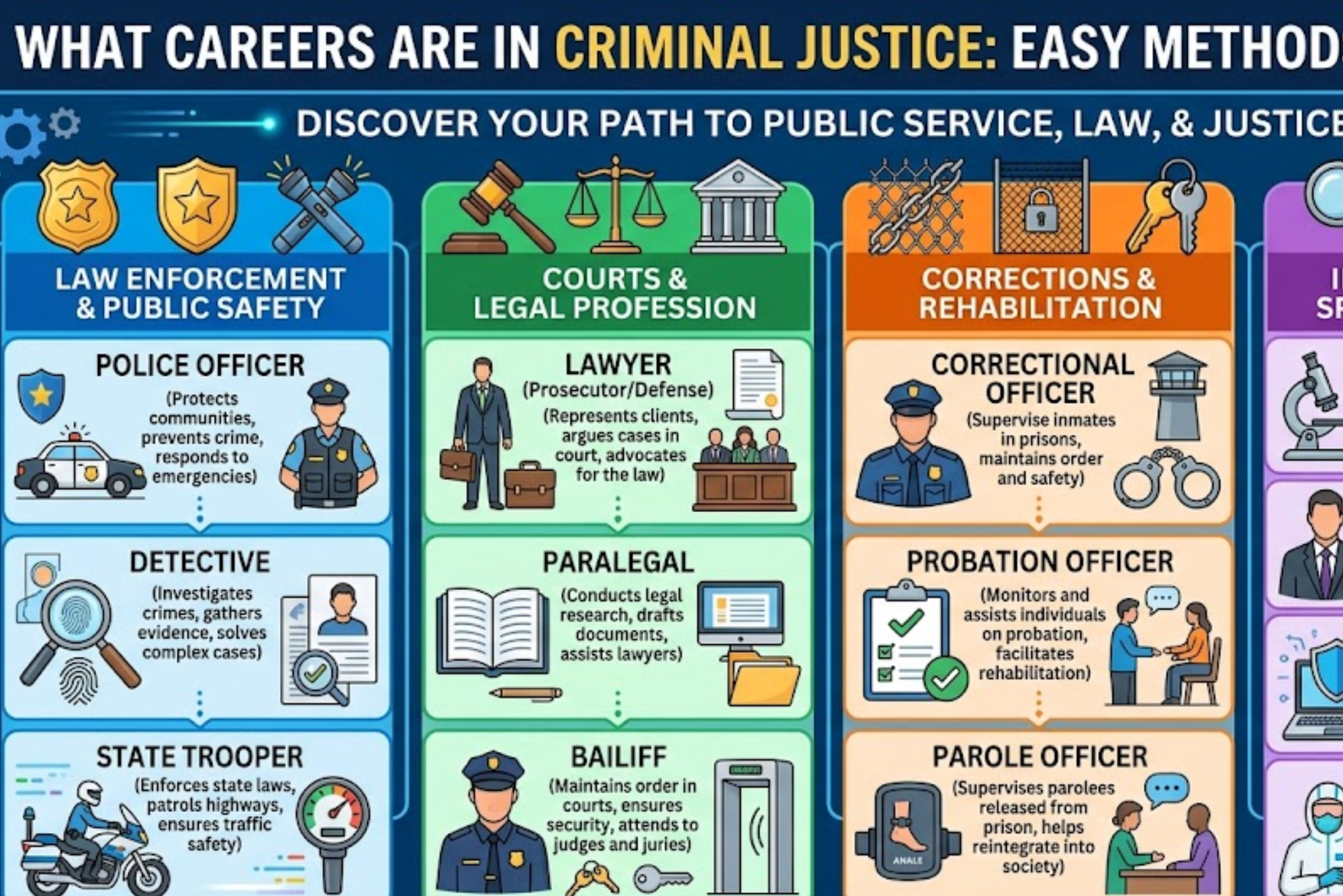
Law enforcement is often the first area people think of when considering criminal justice careers. These professionals are responsible for maintaining public safety, preventing crime, and responding to emergencies.

Common roles include police officers, detectives, and federal agents. Police officers patrol communities and respond to incidents, while detectives investigate crimes and gather evidence. Federal agents handle more complex cases, often involving national security or organized crime.
This career path requires strong decision-making skills, physical fitness, and the ability to remain calm under pressure.
Legal and Court Careers
The legal system forms the backbone of criminal justice. Professionals in this area ensure that laws are applied fairly and justice is delivered appropriately.
Careers include criminal lawyers, judges, prosecutors, and legal consultants. Criminal lawyers defend or prosecute individuals accused of crimes, while judges oversee court proceedings and ensure legal compliance.
Those interested in this path often benefit from understanding how legal systems operate, including areas such as corporate and legal frameworks that influence broader judicial processes.
Corrections and Rehabilitation Careers
Corrections professionals work within prisons, probation offices, and rehabilitation centers. Their primary goal is to manage individuals who have been convicted of crimes and help them reintegrate into society.
Roles include correctional officers, probation officers, and rehabilitation counselors. These professionals focus not only on security but also on reducing repeat offenses through education and support programs.
Forensic and Investigation Careers
Forensic science has become an essential part of modern criminal justice. It involves analyzing evidence to solve crimes and support legal cases.
Careers in this field include forensic scientists, crime scene investigators, and digital forensics experts. These roles require strong analytical skills and attention to detail, as even the smallest piece of evidence can be crucial in solving a case.
Easy Methods to Choose the Right Criminal Justice Career
Choosing the right path in criminal justice can feel overwhelming due to the variety of options available. However, a structured approach can make the process much easier.
Start by identifying your strengths and interests. If you enjoy physical activity and direct interaction with the public, law enforcement may be a good fit. If you prefer research and analysis, forensic science or legal work might be more suitable.
Next, consider your long-term goals. Some careers require extensive education and training, while others offer quicker entry into the workforce. Understanding these requirements can help you make informed decisions.
It is also helpful to research job markets in specific regions. For example, opportunities in major cities often differ from those in smaller areas, and consulting resources such as legal professionals in Abu Dhabi can provide insights into regional demand.
Skills Required for Success in Criminal Justice
Success in criminal justice requires a combination of technical knowledge and personal skills. Communication is essential, as professionals must interact with colleagues, suspects, victims, and legal authorities.
Critical thinking and problem-solving abilities are equally important. Whether analyzing evidence or making quick decisions in the field, professionals must evaluate situations carefully and act accordingly.
Integrity and ethical judgment are also fundamental. Criminal justice professionals are often entrusted with significant responsibility, and maintaining public trust is essential for effective performance.
Education and Qualifications Needed
Educational requirements vary depending on the chosen career path. Entry-level law enforcement positions may require a diploma or basic training, while legal careers typically require advanced degrees.
A degree in criminal justice, law, or a related field can provide a strong foundation. Specialized training programs and certifications may also be necessary for certain roles, particularly in forensic science or investigative work.
Continuous learning is important in this field, as laws, technologies, and procedures evolve over time.
Career Growth and Opportunities
Criminal justice careers offer significant opportunities for advancement. With experience and additional training, professionals can move into leadership roles, specialized units, or higher-level positions within their organizations.
For example, a police officer may advance to detective or supervisory roles, while a legal professional may specialize in specific areas of law or become a judge. Forensic experts can also move into research or consultancy positions.
The global demand for skilled professionals in this field continues to grow, making it a stable and promising career choice.
Challenges in Criminal Justice Careers
While rewarding, criminal justice careers can also be demanding. Professionals often face high-pressure situations, long working hours, and emotional stress.
Law enforcement officers may encounter dangerous situations, while legal professionals must handle complex cases and tight deadlines. Corrections staff work in challenging environments that require patience and resilience.
Understanding these challenges is essential for preparing mentally and professionally for a career in this field.
Conclusion
Exploring careers in criminal justice reveals a wide range of opportunities for individuals who are passionate about law, order, and public service. From law enforcement and legal professions to forensic science and rehabilitation, each path offers unique ways to contribute to society.
By understanding the different career options, required skills, and educational pathways, individuals can make informed decisions and build successful careers. With dedication, integrity, and the right preparation, a career in criminal justice can be both fulfilling and impactful.