Criminal psychology sits at the intersection of human behavior and the justice system. It is a field dedicated to understanding why individuals commit crimes, how criminal behavior develops, and how psychological principles can assist investigations and legal decision-making. For students and professionals exploring this discipline, one of the most common questions is: where do criminal psychologists work and what roles do they actually perform in real-world settings?
Unlike many traditional psychology careers, criminal psychologists operate in highly structured and often high-pressure environments. Their work influences legal outcomes, supports law enforcement investigations, and contributes to public safety strategies.
What Do Criminal Psychologists Actually Do?
Before understanding workplace environments, it is important to understand the scope of the profession. Criminal psychologists study criminal behavior, assess individuals involved in legal cases, and provide psychological insights that support justice-related decisions.
Their responsibilities often include evaluating offenders, assisting in criminal profiling, supporting witness testimony reliability assessments, and advising courts or correctional institutions on behavioral risks.
The role is not limited to theory; it is deeply applied and often directly connected to active investigations or legal proceedings.
Where Do Criminal Psychologists Work?
Law Enforcement Agencies
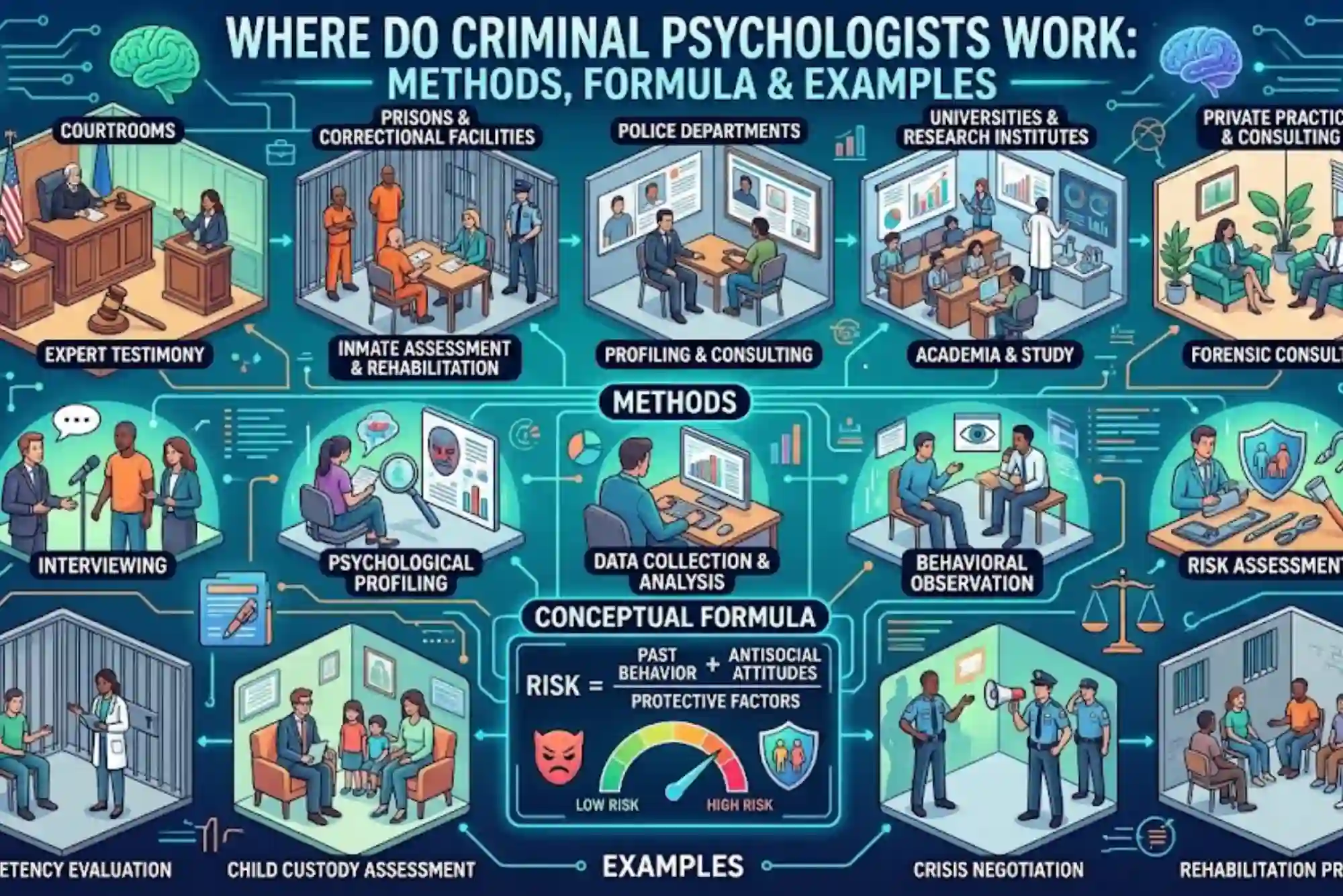
One of the most common workplaces for criminal psychologists is within law enforcement agencies such as police departments, federal investigation units, and specialized crime divisions. Here, they assist investigators in understanding behavioral patterns, motives, and potential offender profiles.

Their insights can help narrow suspect lists, interpret behavioral evidence, and support interrogation strategies. In complex cases involving serial offenses or psychological manipulation, their role becomes particularly critical.
Courts and Legal Systems
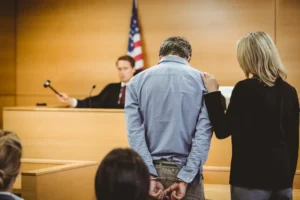
Criminal psychologists frequently work with courts as expert witnesses or consultants. In this setting, they evaluate defendants’ mental states, provide testimony on psychological conditions, and help judges and juries understand complex behavioral evidence.
Their evaluations can influence sentencing decisions, competency rulings, and assessments of criminal responsibility. Courts rely on their expertise to ensure psychological evidence is interpreted accurately and fairly.
Correctional Facilities and Prisons
Another key workplace is correctional institutions, where criminal psychologists assess inmates’ behavior, rehabilitation potential, and risk of reoffending. They design treatment plans and rehabilitation programs aimed at reducing recidivism.
In prisons, they also support mental health management, crisis intervention, and behavioral monitoring of high-risk offenders.
Academic and Research Institutions
Some criminal psychologists focus on academic work, teaching in universities or conducting research in criminology and behavioral science departments. Their studies contribute to a deeper understanding of criminal patterns, psychological disorders linked to offending behavior, and prevention strategies.
Research findings often influence public policy and law enforcement practices.
Private Consultancy and Expert Witness Work
A growing number of criminal psychologists work independently as consultants. They are hired by law firms, government bodies, or private organizations to provide psychological assessments and expert opinions in legal cases.
This role requires strong analytical skills, as their findings may directly impact trial outcomes or compensation decisions.
Methods Used by Criminal Psychologists
Behavioral Analysis and Criminal Profiling
One of the most recognized methods in criminal psychology is behavioral analysis. This involves studying crime scenes, victimology, and offender behavior patterns to develop psychological profiles.
Profiling helps investigators understand potential characteristics of suspects, such as personality traits, habits, and possible motivations.
Psychological Assessments and Risk Evaluation
Criminal psychologists use standardized psychological assessments to evaluate offenders. These tools help measure personality traits, cognitive functioning, and potential risks of future offending behavior.
Risk evaluation is particularly important in parole decisions and sentencing recommendations.
Interviewing and Interrogation Support
Although criminal psychologists do not typically conduct interrogations themselves, they provide valuable guidance on interview techniques. They help law enforcement understand how suspects may respond under pressure and how to structure non-coercive questioning.
This reduces false confessions and improves the reliability of statements gathered during investigations.
Data-Driven Crime Analysis
Modern criminal psychology increasingly relies on data analysis. Patterns from previous cases, demographic data, and behavioral statistics are analyzed to identify trends in criminal activity.
This scientific approach supports predictive policing and resource allocation strategies in law enforcement.
“Formula” Behind Criminal Psychology: How Cases Are Evaluated
While there is no single mathematical formula for criminal psychology, professionals often follow structured evaluation frameworks that combine behavioral evidence, psychological theory, and empirical data.
A simplified way to understand this process is:
Behavioral Evidence + Psychological Assessment + Contextual Analysis = Case Interpretation
This structured reasoning allows psychologists to build logical conclusions about offender behavior while maintaining scientific rigor. Each component plays a critical role: behavioral evidence focuses on what occurred, psychological assessment explores why it may have happened, and contextual analysis examines external influences such as environment or history.
Real-World Examples of Criminal Psychology in Action
In real investigations, criminal psychologists have been instrumental in analyzing serial offense patterns where traditional investigative methods alone were insufficient. By identifying behavioral consistencies, they assist in narrowing down suspect profiles.
In court cases, they may evaluate whether a defendant was mentally competent at the time of the offense. Such evaluations can significantly affect sentencing outcomes or legal responsibility determinations.
In correctional environments, psychologists may work with violent offenders to assess rehabilitation potential and recommend therapy programs aimed at reducing future offenses.
Skills Required to Become a Criminal Psychologist
Becoming a criminal psychologist requires a strong foundation in psychology, criminology, and research methods. Analytical thinking is essential, as professionals must interpret complex behavioral data.
Communication skills are equally important, especially when presenting findings in court or collaborating with law enforcement teams. Emotional resilience is also critical due to exposure to disturbing or high-stakes cases.
Advanced education, often including postgraduate specialization in forensic or criminal psychology, is typically required for professional practice.
Challenges in Criminal Psychology Work
Despite its importance, the field comes with significant challenges. One major difficulty is the ethical responsibility of handling sensitive personal and legal information. Maintaining objectivity while dealing with emotionally charged cases can also be demanding.
Another challenge is the variability of criminal behavior. No two cases are identical, which means psychologists must continuously adapt their methods and reasoning approaches.
Additionally, the legal system requires high levels of accuracy, as psychological testimony can significantly influence legal outcomes.
Conclusion
Understanding where criminal psychologists work provides valuable insight into how psychology integrates with the justice system. From law enforcement agencies to courtrooms and correctional facilities, their role is both diverse and essential.
Their methods combine behavioral science, psychological evaluation, and data interpretation to support fair and effective decision-making in criminal justice. While there is no fixed formula, their structured analytical approach ensures that complex human behavior can be understood in a meaningful and practical way.
As crime patterns evolve and societies become more complex, the demand for skilled criminal psychologists continues to grow, making it one of the most impactful fields within modern psychology.