



Criminal Law
Why do criminals commit crimes: Easy Methods Explained
Why Do Criminals Commit Crimes: Easy Methods Explained Introduction Why do criminals commit crimes: Easy Methods Explained is an important...
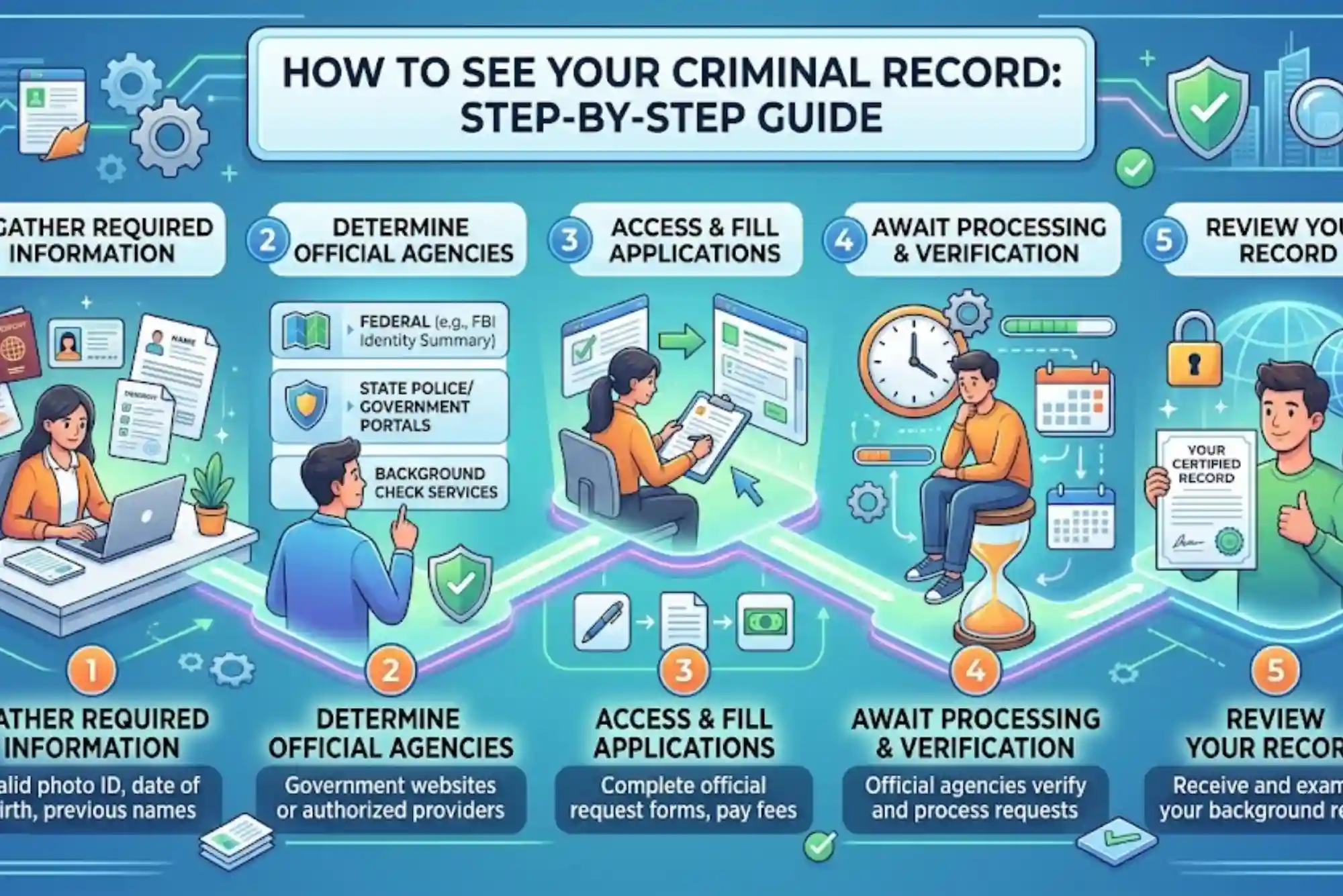
Understanding your personal legal history is increasingly important in today’s interconnected world. Whether you are applying for a job, moving abroad, or fulfilling a legal requirement, knowing how to access your criminal record can help you prepare the right documents and avoid unnecessary delays.
A criminal record is an official summary of any interactions you may have had with law enforcement agencies. In most countries, individuals have the legal right to request access to this information through authorized government channels. However, the process varies depending on jurisdiction, documentation requirements, and verification systems.
This guide provides a clear, step-by-step explanation of how to see your criminal record legally and safely, ensuring you follow the correct procedures without risking misinformation or unauthorized services.
A criminal record is a formal document maintained by government or law enforcement agencies that lists any arrests, charges, convictions, or legal proceedings associated with an individual. It may also include information about case outcomes, sentencing, or rehabilitation status.
In many jurisdictions, this record is used for background checks and identity verification. It is important to note that having a criminal record does not always mean a person has been convicted of a crime; in some cases, it may include arrests that did not lead to convictions.
There are several legitimate reasons why individuals request access to their criminal history. One of the most common is employment screening. Employers, particularly in regulated industries, often require background checks before hiring candidates.
Another common reason is immigration or visa applications. Many countries require applicants to submit a police clearance certificate or equivalent document to verify that they do not have a serious criminal background.
Individuals may also request their criminal record for personal awareness, legal corrections, or to ensure that outdated or incorrect information is updated or removed.
While the process can differ between countries, the general steps to access your criminal record follow a similar structure. Below is a practical guide that applies to most legal systems.
The first step is to determine which government agency is responsible for maintaining criminal records in your jurisdiction. This is usually a national police department, ministry of interior, or justice department.
For example, some countries issue official police clearance certificates through centralized online portals, while others require applicants to visit local police stations or designated service centers.
Before submitting a request, you must prepare the necessary documentation. Common requirements include a valid national ID card or passport, recent photographs, proof of residence, and in some cases biometric data such as fingerprints.
Ensuring your documents are accurate and up to date helps prevent delays or rejection of your application.
Once your documents are ready, you can submit your application either online or in person, depending on your country’s system. Online applications are becoming more common and allow users to complete the process through secure government websites.
In offline systems, applicants may need to visit a police station or authorized service center to submit forms and supporting documents physically.
After submission, authorities will verify your identity to ensure that the request is legitimate. This may involve biometric verification, digital authentication, or cross-checking your details against national databases.
This step is critical to maintaining data security and preventing unauthorized access to sensitive personal information.
Once verification is complete, you will receive your criminal record or a police clearance certificate. This document will indicate whether you have any recorded criminal history or confirm that no record exists.
In many systems, the certificate can be downloaded digitally, while others may issue a physical copy stamped and signed by an authorized official.
Modern governments are increasingly moving toward digital services for criminal record access. Online systems are typically faster, more convenient, and available 24/7. They also reduce the need for physical paperwork and in-person visits.
However, offline methods remain important in regions where digital infrastructure is limited or where additional identity verification is required. Some cases, such as international background verification, may still require physical documentation.
One of the most common challenges applicants face is incomplete documentation. Missing or incorrect details can lead to delays or rejection of the request. It is essential to carefully review all requirements before submission.
Another issue is using unauthorized third-party services. Individuals should always rely on official government channels to avoid fraud or data misuse.
Processing delays can also occur during high-demand periods. Planning ahead and applying early can help reduce stress, especially for visa or job-related deadlines.
In most legal systems, individuals have the right to access their own criminal records under data protection and privacy laws. However, access to another person’s record is generally restricted unless legally authorized.
Authorities are also required to ensure that sensitive personal data is securely stored and only shared with verified requests. This helps protect individuals from identity theft or misuse of information.
Employers often use criminal background checks as part of their hiring process to ensure workplace safety and compliance with industry regulations. This is particularly common in sectors such as finance, healthcare, education, and government services.
However, responsible employers typically assess criminal records in context, considering the nature of the offense, how long ago it occurred, and its relevance to the job role.
Many organizations also comply with fair hiring practices to avoid discrimination and ensure equal employment opportunities for candidates.
Knowing how to see your criminal record is an important part of managing your personal and professional life. Whether you need it for employment, immigration, or personal verification, following the correct legal procedures ensures accuracy and compliance.
By understanding the step-by-step process—from identifying the correct authority to receiving your official record—you can navigate the system more efficiently and avoid common mistakes.
Ultimately, criminal record access is designed to promote transparency, accountability, and trust within legal and professional systems, helping individuals and institutions make informed decisions.
The articles published on TopLawyer.ae are prepared for general educational and informational purposes only and do not constitute formal legal advice or the formation of an attorney-client relationship. UAE laws, judicial precedents, and regulatory procedures are subject to frequent legislative amendments. Readers should consult a licensed legal advocate or registered law firm regarding their specific circumstances prior to taking legal action.

Licensed advocates and legal consultants experienced in this practice area across the UAE.

Why Do Criminals Commit Crimes: Easy Methods Explained Introduction Why do criminals commit crimes: Easy Methods Explained is an important...

Where Do I Go to Get a Criminal Record Check: Everything You Need to Know If you are wondering, “Where...

What Is the Role of International Criminal Court: Beginner to Advanced Guide Meta Title: Role of International Criminal Court Explained...