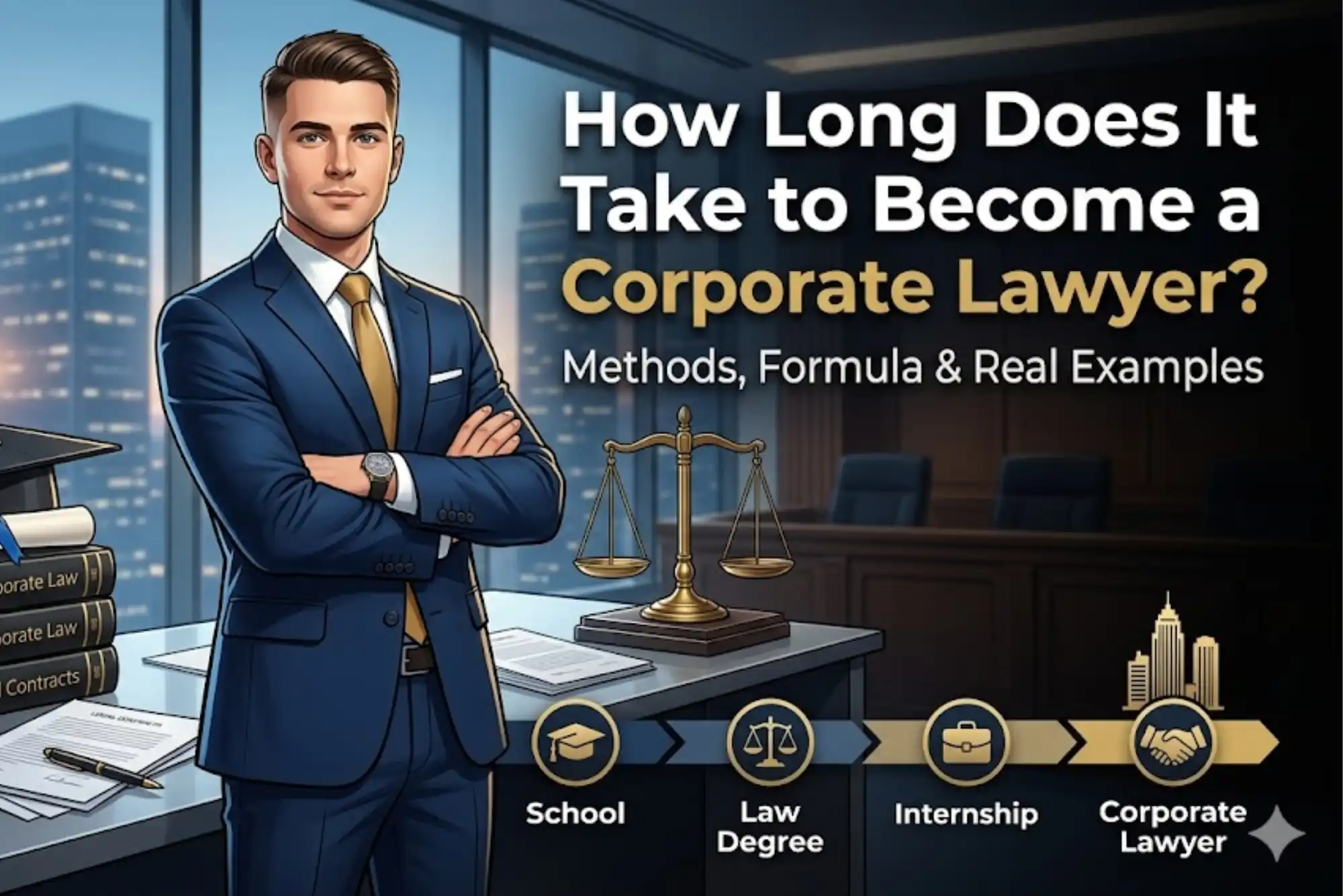
Choosing a career in corporate law is often driven by ambition, intellectual curiosity, and the desire to work at the center of business decision-making. Yet one of the most common questions aspiring lawyers ask is simple: how long does it take to become a corporate lawyer? The answer is not fixed. It depends on your education pathway, geographic location, and career strategy.
This guide breaks down the timeline, explains proven methods to accelerate your progress, and provides realistic examples to help you understand what the journey truly looks like in practice.
Understanding the Corporate Lawyer Career Path
Corporate lawyers advise businesses on legal rights, obligations, and responsibilities. Their work spans contracts, compliance, mergers, acquisitions, and regulatory frameworks. Unlike other legal specialties, corporate law demands both legal expertise and a strong understanding of business operations.
In regions like the UAE, where international business activity is rapidly expanding, corporate lawyers play a critical role. Many professionals begin their careers by working with experienced firms or exploring opportunities with corporate legal experts in Abu Dhabi to gain exposure to complex commercial environments.
The Standard Timeline: A Realistic Breakdown
The traditional path to becoming a corporate lawyer typically takes between six and ten years. This includes undergraduate education, legal studies, and licensing requirements. While the structure may vary slightly between countries, the core stages remain consistent.
Undergraduate Education
The first step is earning a bachelor’s degree, which usually takes three to four years. Although law-specific majors are beneficial, degrees in business, economics, or political science can also provide a strong foundation.

Law School or Legal Qualification
After completing undergraduate studies, aspiring lawyers must attend law school or pursue an equivalent legal qualification. This stage generally takes three years in many systems, though some countries offer integrated programs that combine undergraduate and legal education into a single five-year course.
Licensing and Bar Qualification
Graduating from law school is not the final step. Candidates must pass a licensing exam or meet professional requirements to practice law. Preparation and completion can take several months to a year, depending on the jurisdiction.
A Simple Formula to Estimate Your Timeline
To better understand your journey, you can apply a simple formula:
Total Time = Undergraduate Years + Law Degree Years + Licensing Period + Practical Experience
For example, a typical scenario might look like this: four years of undergraduate study, three years of law school, and one year for licensing and early training. This results in an eight-year pathway to becoming a fully qualified corporate lawyer.
However, this formula is flexible. Some individuals complete accelerated programs, while others take longer due to specialization or part-time study.
Methods to Become a Corporate Lawyer Faster
While the legal profession demands rigorous training, there are strategic ways to reduce the overall timeline without compromising quality.
Choosing Integrated Law Programs
Integrated degrees allow students to begin legal education immediately after high school. These programs combine undergraduate and law studies, often reducing the total duration by one to two years.
Gaining Early Practical Experience
Internships during your studies can significantly accelerate your career progression. By working with legal professionals early, you develop practical skills that reduce the learning curve after graduation.
Focusing on Corporate Law Early
Specializing in corporate law during your academic years helps you build expertise faster. This targeted approach allows you to transition smoothly into corporate roles without spending additional years exploring different legal fields.
Real-World Examples of Career Timelines
Understanding real-life scenarios can provide valuable clarity. Consider the following examples:
Example 1: Traditional Pathway
A student completes a four-year bachelor’s degree, attends law school for three years, and spends one year preparing for licensing. This individual becomes a corporate lawyer in approximately eight years.
Example 2: Accelerated Pathway
Another student enrolls in a five-year integrated law program and completes licensing within six months. This reduces the total timeline to around five and a half years.
Example 3: Extended Specialization
Some professionals pursue additional certifications or international qualifications, extending their timeline to ten years or more. While longer, this path often leads to higher-level roles and global opportunities.
Factors That Influence the Timeline
The time required to become a corporate lawyer is influenced by several variables. Academic performance plays a major role, as competitive law schools and firms often prioritize high-achieving candidates. Geographic location also matters, as legal systems differ in structure and requirements.
Financial resources can impact how quickly a student progresses through education, while personal motivation and career planning determine how efficiently each stage is completed.
The Role of Practical Training in Career Development
Practical experience is not just an optional step; it is essential. Many successful corporate lawyers attribute their growth to early exposure to real cases and business environments. Working with established firms or exploring opportunities through platforms like Top Lawyer UAE can provide valuable insights into the profession.
This hands-on experience bridges the gap between theory and practice, ensuring that new lawyers are prepared for the complexities of corporate work.
Career Outlook and Long-Term Growth
Corporate law offers significant long-term benefits. As professionals gain experience, they can advance into senior roles, become partners in law firms, or transition into in-house legal positions within major corporations.
The demand for corporate lawyers continues to grow, particularly in regions with strong economic development. This makes the time investment worthwhile for those committed to the profession.
Balancing Time Investment with Career Rewards
While the journey to becoming a corporate lawyer requires patience, the rewards often justify the effort. Beyond financial benefits, the profession offers intellectual challenges, career stability, and opportunities to work on high-impact business decisions.
Understanding the timeline allows aspiring lawyers to plan effectively and stay motivated throughout the process.
Conclusion: Planning Your Path with Clarity
So, how long does it take to become a corporate lawyer? For most individuals, the answer lies between six and ten years. However, with the right strategy, focused education, and early experience, it is possible to streamline this journey.
Rather than focusing solely on speed, aspiring lawyers should prioritize quality education, practical exposure, and long-term career growth. With a clear plan and consistent effort, the path to becoming a corporate lawyer becomes not just achievable, but highly rewarding.